The National Water Harvesting and Storage Authority (NWHSA) is seeking stronger security cooperation with the Water Police Unit to protect dams, reservoirs, water treatment facilities and other strategic water infrastructure against vandalism, theft, encroachment and sabotage.
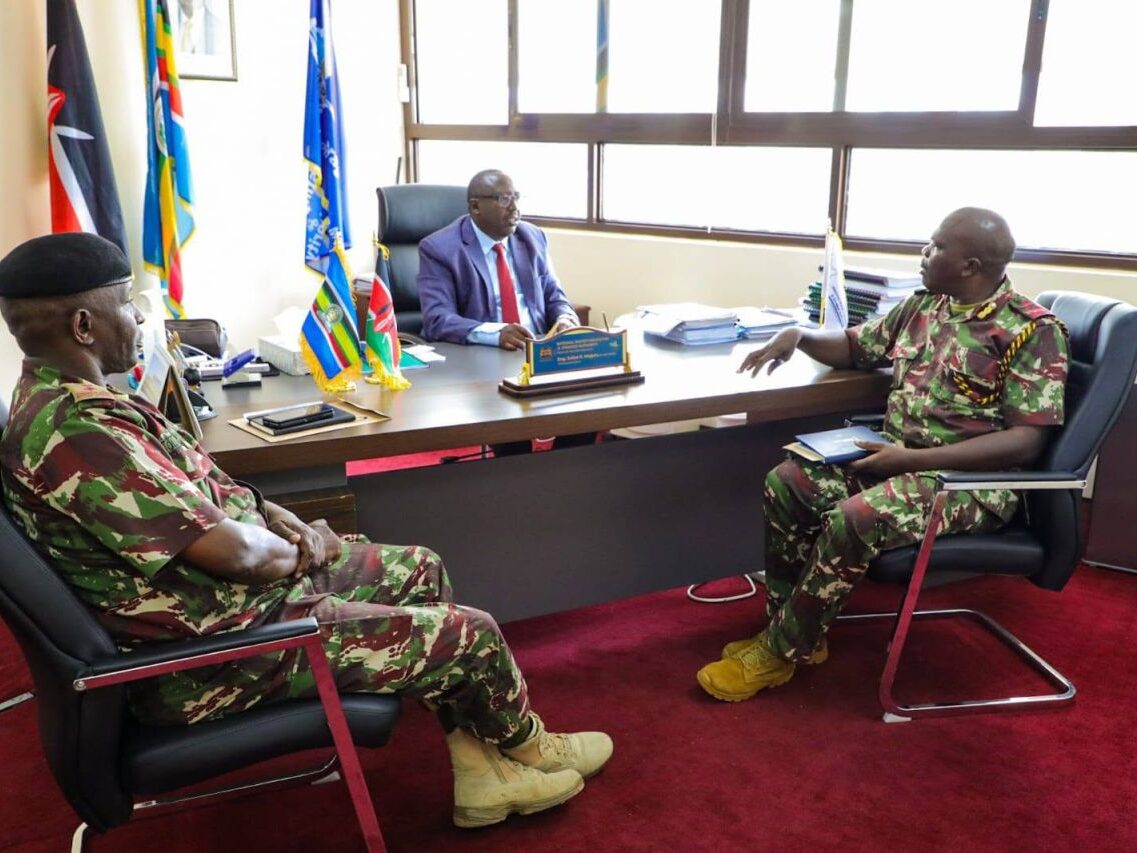
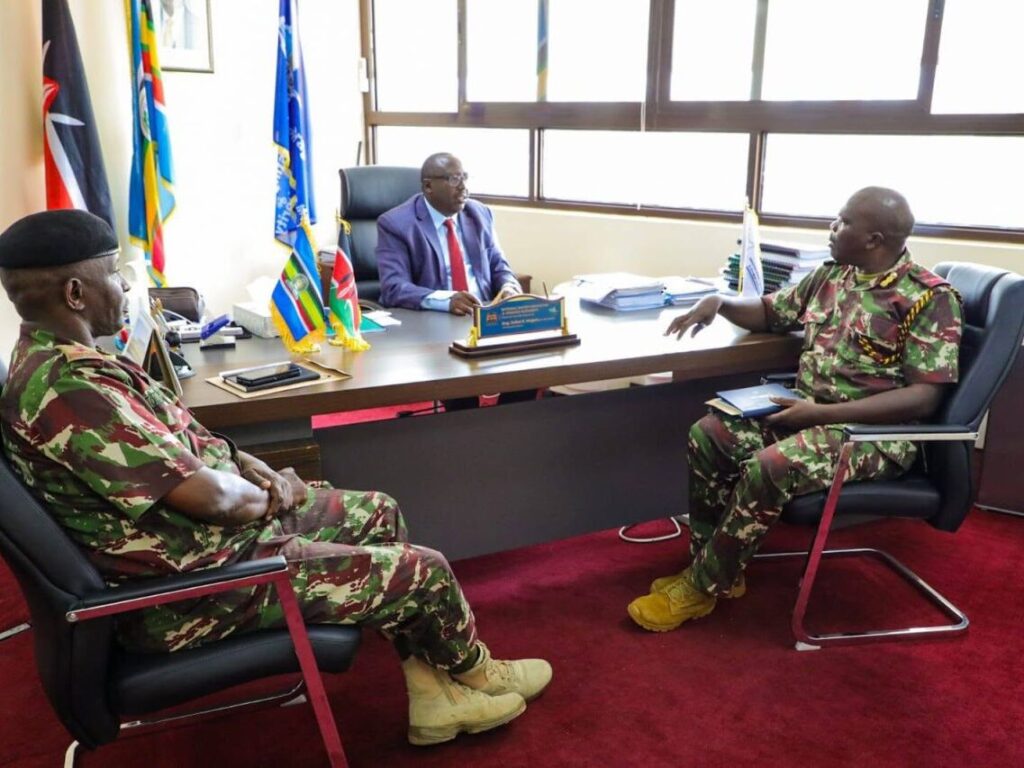
The partnership was discussed during a meeting between NWHSA Chief Executive Officer Eng. Julius Mugun and officials from the Water Police Unit at the Authority’s headquarters, where both sides explored areas of collaboration to strengthen the protection of water infrastructure across the country.
The meeting was attended by Water Police Unit Commissioner and Commandant Michael Kariuki, OGW, and Staff Officer for Operations Samuel Olarasha. NWHSA Head of Business Development George Nyabicha also participated.
Discussions focused on the specialised mandate of the Water Police Unit, particularly its role in providing security and enforcement support for critical water installations that are essential to national water supply, storage and distribution.
The Water Police Unit is a specialised security division of the Administration Police Service (APS), established through a gazette notice issued by the Inspector General of the National Police Service in July 2026 to provide enforcement and security support to the Ministry of Water, Sanitation and Irrigation.
Under the proposed collaboration, the unit is expected to support round-the-clock protection of strategic water installations, including dams, reservoirs, water towers, treatment plants and major water transmission pipelines. These facilities play a central role in storing, treating and distributing water to households, businesses, industries and institutions.
The engagement comes amid growing concerns over the security of public water infrastructure, which faces threats ranging from vandalism and illegal connections to unauthorised water abstraction, theft of infrastructure components and encroachment on protected facilities.
Security challenges affecting water infrastructure can have wider consequences for service delivery, particularly where damage to major installations disrupts supply to large populations or increases the cost of repairs and maintenance.
The government’s decision to establish the Water Police Unit also comes against the backdrop of significant losses in Kenya’s water sector. Annual losses through physical leakages, illegal connections, faulty meters and other operational inefficiencies continue to place pressure on water service providers.
In addition to protecting infrastructure, the Water Police Unit is expected to support enforcement against illegal water connections, unauthorised abstraction and water theft, which contribute to non-revenue water losses. Its wider responsibilities also include supporting responses to water-related disputes and emergencies.
For NWHSA, the partnership is particularly important because the Authority is responsible for developing, maintaining and managing national public water works for water storage and flood control on behalf of the national government. Its infrastructure includes strategic dams and other water-harvesting facilities that support national water security.
Protecting these investments is essential as Kenya continues to expand water storage capacity to address recurring droughts, unreliable rainfall and increasing demand for water.
The collaboration is expected to strengthen coordination between water infrastructure managers and security agencies, improve surveillance and enforcement, and safeguard public investments against activities that threaten their functionality.
The meeting signals a broader approach to water security in which infrastructure development is complemented by stronger protection, effective management and enforcement to ensure that strategic water assets remain operational and serve communities over the long term.