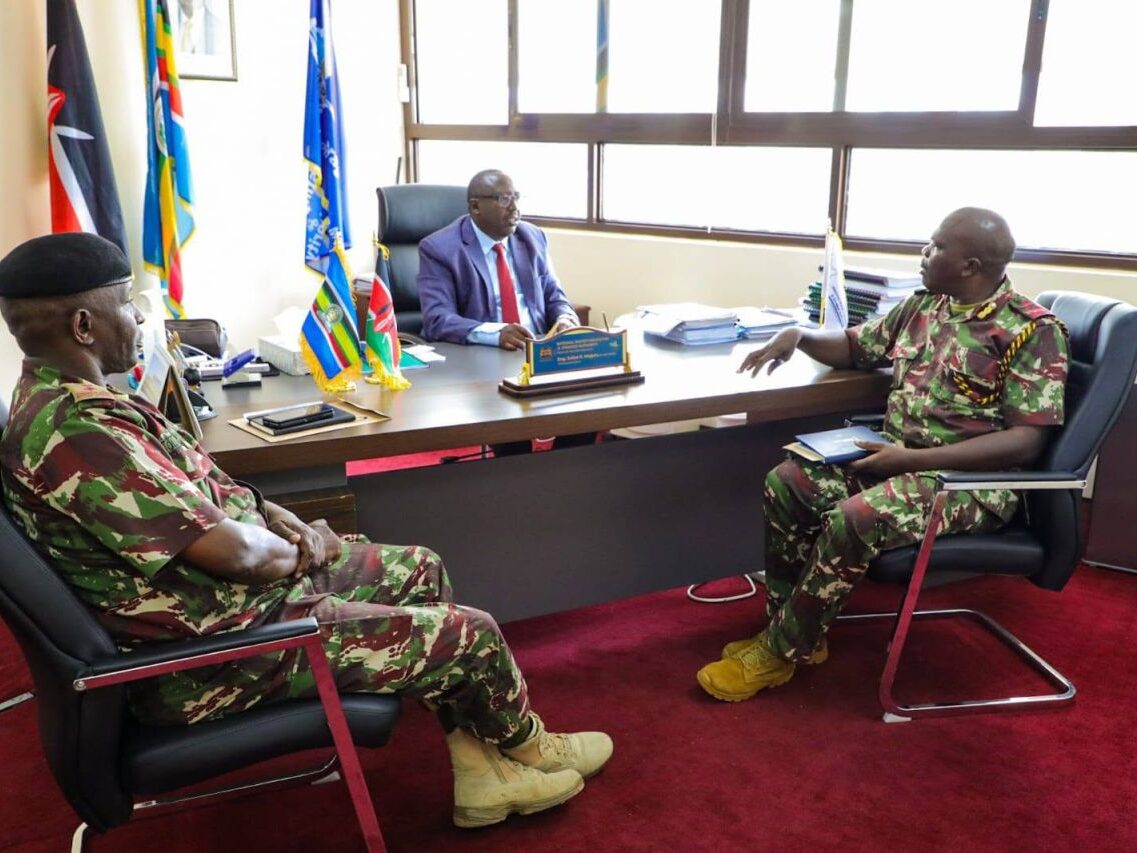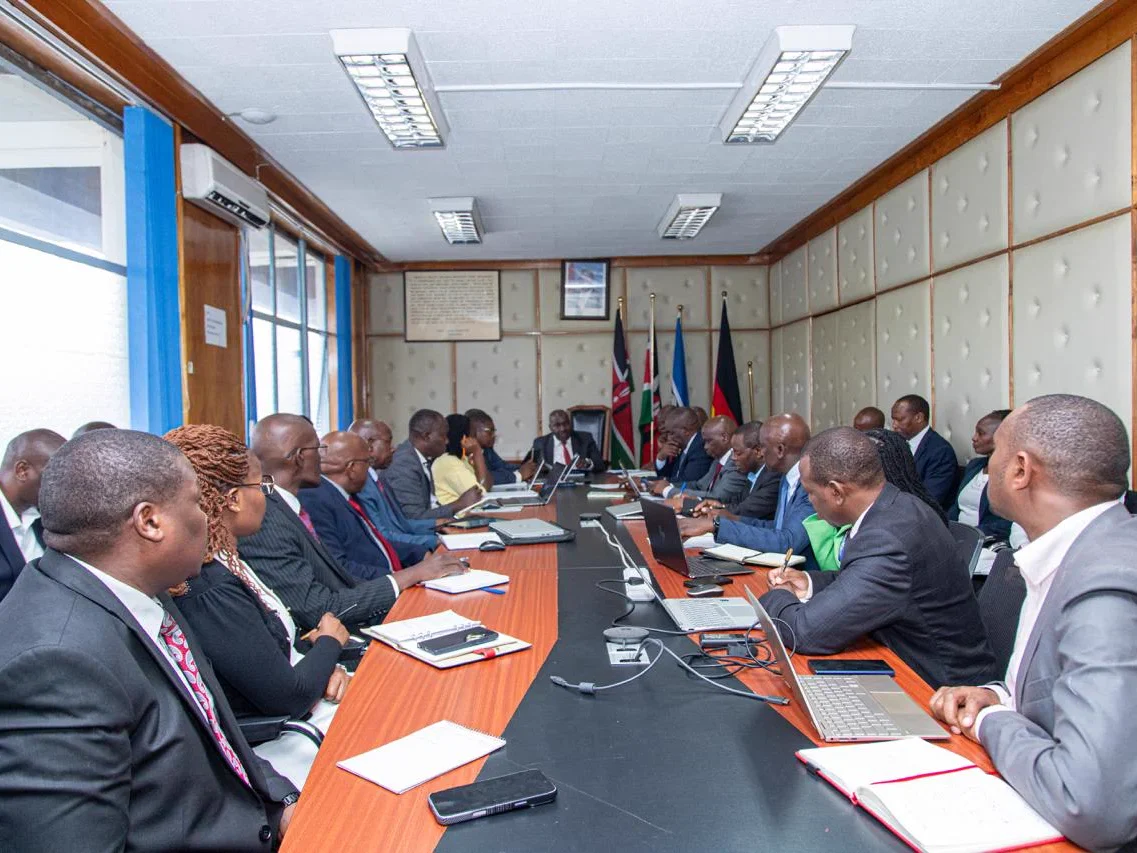








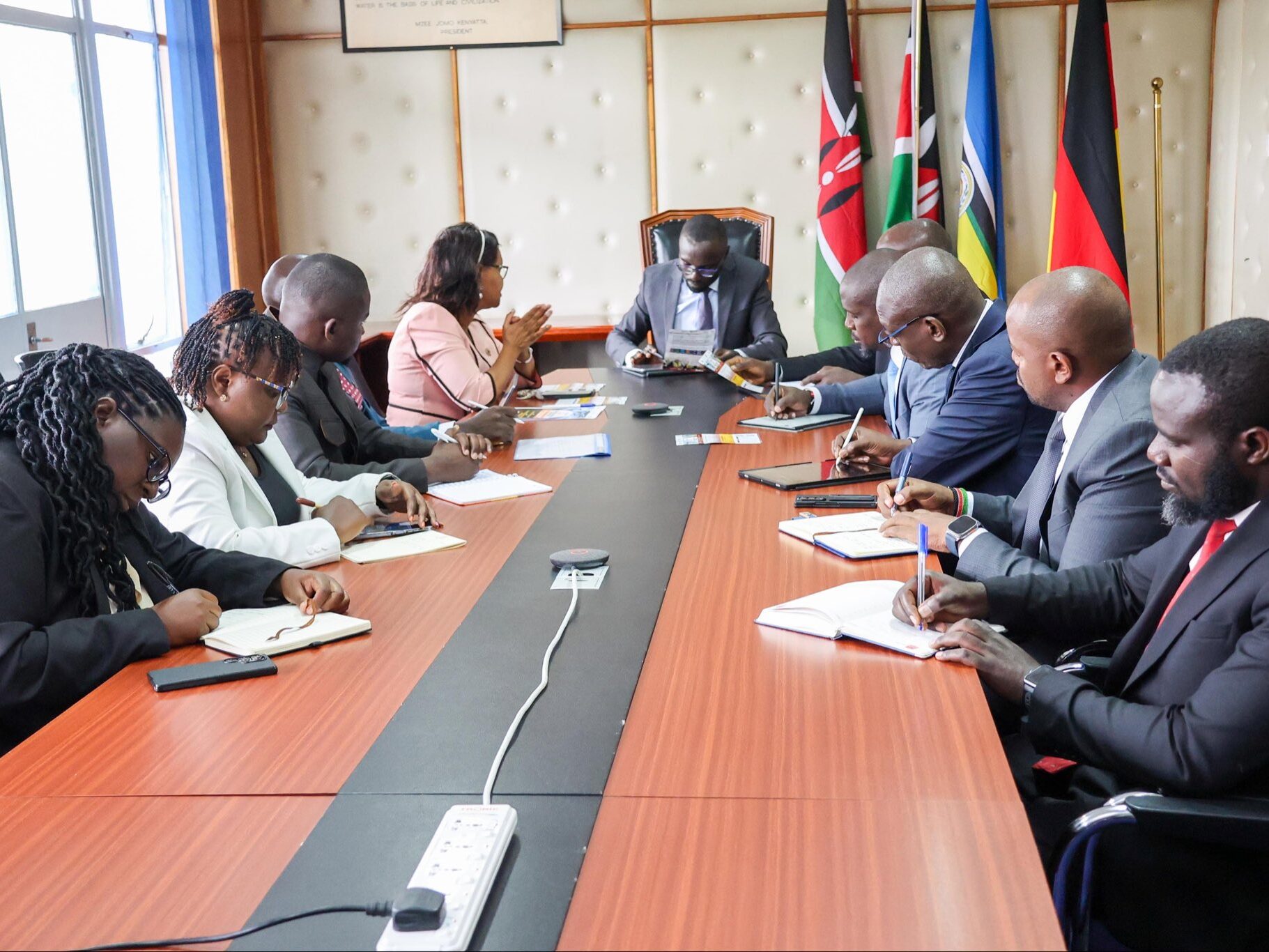
Cabinet Secretary for Water, Sanitation and Irrigation Eng. Eric Mugaa on Wednesday, November 18, 2026, held a meeting with members of the Institution of Engineers of Kenya (IEK) Council at Maji House in Nairobi to discuss strengthening engineering capacity, improving institutional governance and expanding mentorship opportunities for young professionals in the water, sanitation and irrigation sectors.
The delegation was led by IEK First Vice President Eng. Howard Ashihundu M’Mayi and Honorary Secretary Eng. Grace Muthoni Kagondu. The discussions focused on the contribution of engineering professionals to national development, particularly in the planning, design, construction and maintenance of critical infrastructure, as well as governance challenges affecting engineering institutions.
Mugaa emphasised the important role engineers play in developing infrastructure that supports access to safe drinking water, improved sanitation and agricultural production. He noted that their technical expertise is essential in ensuring that infrastructure investments deliver sustainable benefits to communities and support the country’s development priorities.
In the water sector, engineers are involved in developing dams, water treatment plants, transmission pipelines, storage facilities and distribution networks. Their responsibilities also extend to wastewater treatment facilities and sewerage systems, which are increasingly important as urban populations expand and demand for sanitation services grows.
In irrigation, engineering expertise is required in the development of water storage facilities, pumping stations, canals, drainage systems and other infrastructure that supports agricultural production. Proper planning, construction and maintenance of these investments are important in improving water-use efficiency, expanding irrigated agriculture and strengthening food security.
The meeting also examined governance gaps within engineering institutions and the need to strengthen professional standards and cooperation between government agencies and professional bodies. Effective institutional governance is important in promoting accountability, maintaining technical standards and ensuring that infrastructure projects comply with established engineering requirements.
A key issue raised during the engagement was the mentorship of young engineers. Mugaa underscored the importance of providing emerging professionals with opportunities to gain practical experience, develop confidence and acquire the technical and leadership skills required to take up greater responsibilities in the engineering profession.
The proposed mentorship approach is intended to encourage knowledge transfer between experienced engineers and younger professionals while creating opportunities for practical exposure to infrastructure development. Such programmes can help bridge the gap between university training and the demands of professional engineering practice, particularly in specialised areas such as water infrastructure, sanitation systems and irrigation development.
The Institution of Engineers of Kenya plays an important role in advancing the engineering profession through professional development, knowledge sharing and engagement with government and industry stakeholders. It provides a platform for engineers to discuss emerging technologies, professional standards and challenges affecting infrastructure development.
Kenya’s engineering profession is regulated through the Engineers Board of Kenya, which oversees the registration and practice of engineers. Collaboration between the regulator, professional associations, training institutions and government agencies is important in maintaining professional competence and strengthening the country’s technical workforce.
The discussions come as Kenya continues to pursue investments in water supply, sanitation and irrigation infrastructure to address service gaps, support economic growth and improve resilience to climate variability. Delivering these projects requires skilled professionals capable of managing complex engineering assignments, supervising construction and ensuring that completed infrastructure remains functional over time.
Mugaa was accompanied by Principal Secretary for the State Department for Water and Irrigation, Mr. Julius Korir, Irrigation Secretary Eng. Vincent Kabuti and other engineers during the meeting.
The engagement provided an opportunity for the Ministry and IEK to discuss areas of cooperation in professional development, institutional governance and technical capacity building. Strengthening collaboration between the Government and engineering professionals is expected to support the development of a skilled workforce capable of delivering and maintaining the infrastructure required to meet Kenya’s growing water, sanitation and irrigation needs.