






The Government is advancing a regional water infrastructure programme targeting improved access to reliable water supplies across Uasin Gishu, Elgeyo-Marakwet, West Pokot and Turkana counties through the construction and expansion of water intake structures, transmission pipelines and distribution networks.
The North Rift Valley Water Infrastructure Programme, implemented by the North Rift Valley Water Works Development Agency (NRVWWDA), comprises several water supply interventions aimed at increasing bulk water availability and improving access to safe water for communities across the four counties.
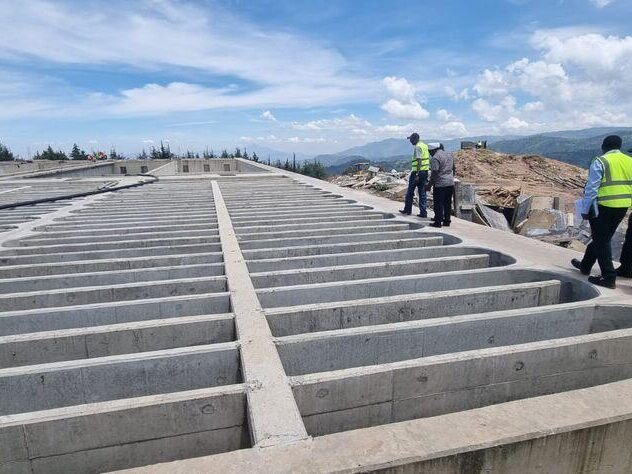
The ongoing works include construction of reinforced concrete water intake structures, excavation of pipeline trenches, installation of primary water transmission pipelines and development of associated storage and distribution infrastructure.
The programme is significant for the North Rift region, which covers approximately 83,000 square kilometres and has a population of about 3.2 million people.
The region’s varied geographical conditions, ranging from agricultural highlands to arid and semi-arid areas in Turkana and West Pokot, present different challenges in accessing and distributing water.
While some communities depend on rivers and springs, others rely heavily on boreholes, water pans and alternative sources, particularly during prolonged dry periods.
The infrastructure programme seeks to address these challenges by strengthening water abstraction facilities and improving connections between water sources and communities through transmission and distribution networks.
The Ministry of Water, Sanitation and Irrigation has been involved in overseeing the development of water infrastructure across the region, with technical implementation undertaken by NRVWWDA.
Construction activities include civil works at raw water intake facilities, pipeline excavation, installation and embedding of primary transmission infrastructure, as well as improvements to associated water storage facilities.
The engineering works are also expected to address challenges associated with difficult terrain and seasonal weather conditions, which can affect construction schedules and the installation of water pipelines.
Beyond the regional programme, NRVWWDA is implementing and planning several water supply interventions targeting communities and public institutions across its area of jurisdiction.
In Elgeyo-Marakwet County, the Chemwabul Dam Water Supply Project is expected to improve access to water for approximately 6,200 households in Kaptarakwa Ward, including residents of Kipchagan, Kamugo, Milimani, Kaptere, Rokocho and Kaptarakwa villages.
Other interventions include the Tot Water Supply Project and the Kosich-Embobut Water Supply Project in Elgeyo-Marakwet, alongside water pans targeting communities in Turkana and West Pokot counties.
In Uasin Gishu, proposed investments include the expansion of Two Rivers Dam and Sosiani Treatment Works, as well as additional water supply and sanitation projects targeting Eldoret and surrounding areas.
These projects highlight the range of infrastructure required to improve regional water access, including dams, water harvesting facilities, treatment plants, boreholes, storage reservoirs and distribution pipelines.
Improved water availability is also expected to support economic activities, including livestock keeping, small-scale irrigation, businesses and public institutions that depend on consistent water supplies.
For communities in the arid and semi-arid parts of the region, investments in water storage and improved abstraction facilities are particularly important in strengthening resilience to drought and changing rainfall patterns.
However, the long-term performance of the infrastructure will depend on proper maintenance, protection of water catchments, efficient management of water resources and adequate financing for operations.
NRVWWDA is mandated under the Water Act 2016 to develop, maintain and manage national public water works within its jurisdiction.
As infrastructure development continues across the North Rift, the programme is expected to contribute to expanding water supply capacity and improving access to more reliable services for households and businesses across the four counties.