








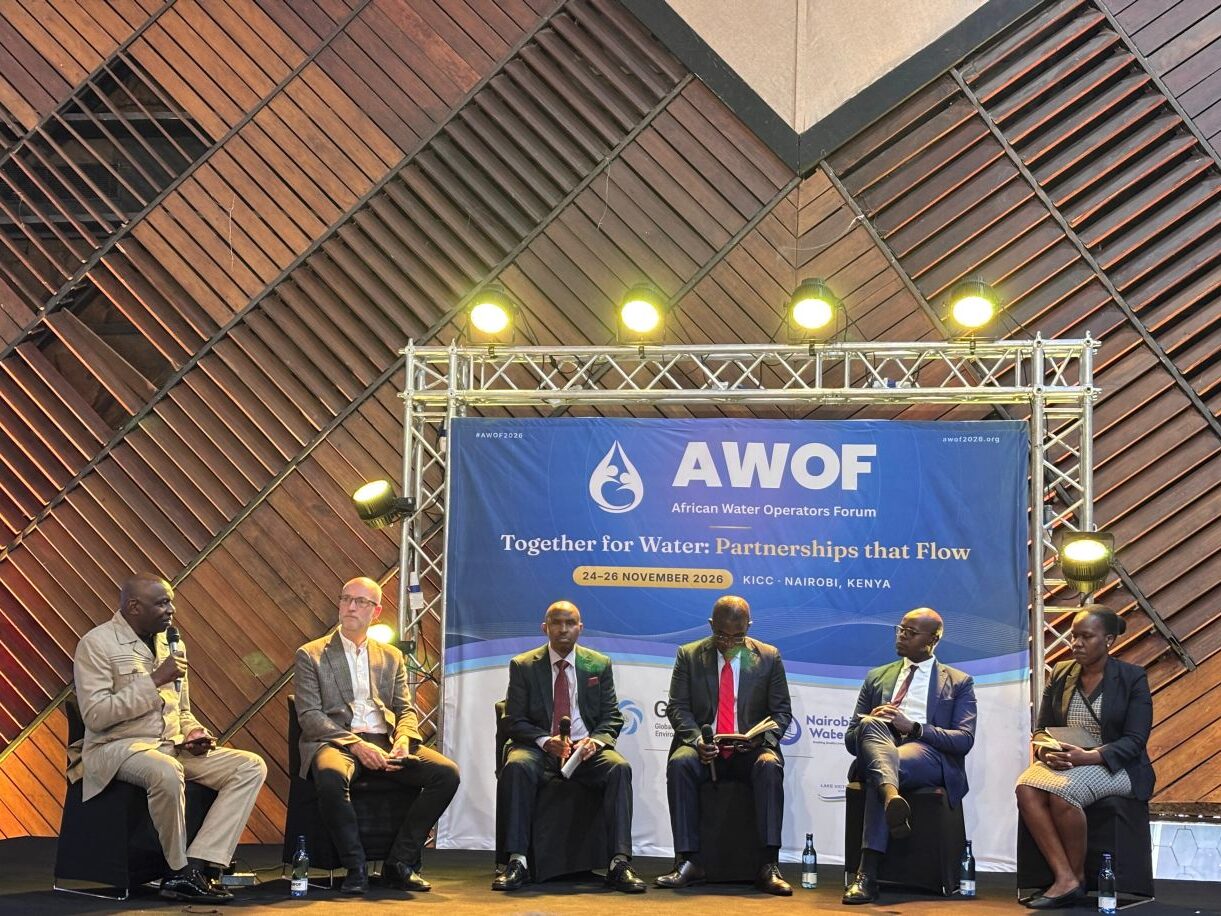
The Water Services Regulatory Board (WASREB) has called for stronger regulatory oversight and improved financial management among water service providers to strengthen the sustainability of water and sanitation services amid growing climate change challenges.
The regulator made the call during the inaugural Africa Water Operators Forum (AWOF) 2026, which brought together water sector stakeholders, policymakers, utilities, development partners and industry experts to discuss strategies for improving water service delivery across the continent.
The forum was convened by the Global Institute for Water, Environment and Health (GIWEH) in partnership with Nairobi City Water and Sewerage Company (NCWSC), which served as the host utility.
It was officially opened by Dr Aurelia Chepkirui Rono, Principal Secretary in the State Department for Parliamentary Affairs, alongside representatives from government institutions and other water sector partners.
WASREB was represented by Acting Deputy Director of Compliance Francis Maluki, who participated in high-level panel discussions focusing on bankable and climate-resilient water utilities.
The discussions examined how water service providers can strengthen their financial sustainability, improve institutional governance and develop the capacity to withstand climate-related disruptions affecting water supply and sanitation infrastructure.
During the engagement, WASREB emphasised that effective regulation is essential in ensuring water utilities operate efficiently, remain financially viable and provide reliable services to consumers.
The regulator underscored the importance of well-governed water service providers, noting that financially stable utilities are better positioned to attract investment, maintain infrastructure and respond to the increasing demand for water and sanitation services.
Financial sustainability remains a major concern for many African water utilities, which face challenges including inadequate infrastructure investment, high operational costs, water losses and limited revenue collection. These constraints can undermine their ability to expand services and maintain existing systems.
Climate change is adding another layer of pressure, with prolonged droughts, unpredictable rainfall and flooding threatening water sources, treatment facilities and distribution networks.
Water utilities are therefore being encouraged to integrate climate resilience into infrastructure planning, investment decisions and daily operations to ensure continuity of services during extreme weather events.
The discussions on bankable utilities also highlighted the importance of strengthening financial and institutional systems to make water service providers more attractive to development financiers and private investors.
For regulators, this requires establishing effective compliance mechanisms, promoting accountability and ensuring that utilities meet performance standards while maintaining financial discipline.
WASREB’s participation provided an opportunity to contribute regulatory perspectives to continental discussions on improving the performance of water and sanitation institutions.
The forum also created a platform for water sector players to exchange experiences, explore partnerships and identify approaches that can improve operational efficiency and support sustainable infrastructure development.
As African countries pursue expanded access to safe water and sanitation, stronger regulatory frameworks are expected to play an important role in ensuring that investments translate into reliable services and measurable improvements for consumers.
The participation of WASREB reflects the growing importance of regulation in building financially sustainable water utilities capable of responding to changing environmental conditions while meeting the needs of expanding populations.