







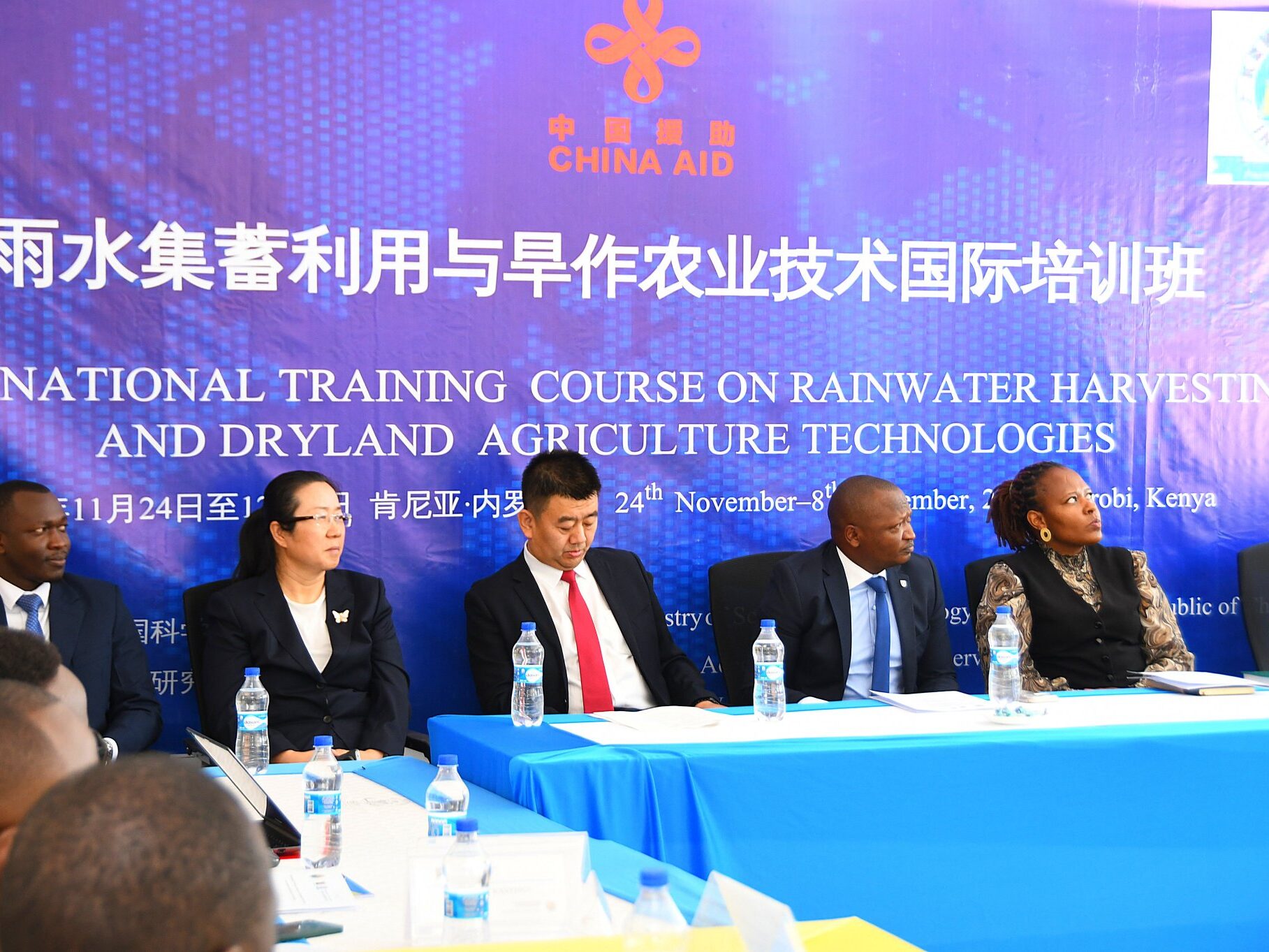
Kenya is strengthening cooperation with China on rainwater harvesting, water storage and dryland agricultural technologies as the government seeks to improve food production and build resilience against climate change, particularly in Arid and Semi-Arid Lands (ASALs).
The partnership is expected to support the adoption of appropriate technologies for capturing and storing rainwater, improving irrigation and promoting agricultural production in regions that experience unreliable rainfall and prolonged dry spells.
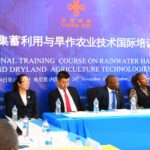
The renewed cooperation was highlighted during the opening of a three-week International Training Course on Rainwater Harvesting and Dryland Agriculture Technology at the Kenya Water Institute (KEWI) in Nairobi.
The training, sponsored by China’s Ministry of Science and Technology, brings together Kenyan officers for technical capacity building and knowledge exchange on approaches that can improve water management and agricultural productivity in water-scarce environments.
Irrigation Secretary in charge of Land Reclamation, Climate Resilience and Irrigation Water Management, Mr Tanui, officially opened the programme on behalf of Cabinet Secretary for Water, Sanitation and Irrigation Eng. Eric Mugaa.
Speaking during the ceremony, Tanui said the training marked an important step in strengthening bilateral cooperation between Kenya and China, particularly in applying China’s experience in rainwater harvesting, water storage infrastructure and dryland agricultural development.
He noted that Kenya continues to face challenges associated with uneven rainfall distribution, with substantial volumes of rainwater flowing into rivers, lakes and other water bodies without being adequately harvested and stored for future use.
The situation leaves many communities vulnerable to prolonged droughts, water shortages, crop failures and livestock losses, particularly in counties located in the country’s dryland regions.
The government is therefore seeking to strengthen rainwater harvesting and storage as part of broader interventions to improve water availability for households, agriculture and livestock production.
Tanui said the training would equip participating officers with practical skills and technical knowledge to support national priorities in water harvesting, irrigation development and climate resilience.
China’s experience in developing water harvesting infrastructure, efficient storage systems and agricultural technologies suited to dry environments is expected to provide useful lessons for Kenya as it seeks to address water scarcity and improve agricultural production.
The programme covers several technical areas, including rainwater harvesting methods, water conservation, catchment management, soil and water conservation, efficient water utilisation and climate-smart agricultural practices.
Participants will also learn about the development of small-scale water harvesting infrastructure, integrated water resource management and technologies that can improve farming in areas with limited water supplies.
These approaches are particularly important for ASAL counties, where dependence on seasonal rainfall often exposes farmers and pastoralist communities to climate-related shocks.
The government is increasingly looking at ways of ensuring that rainwater collected during rainy seasons is stored and made available during dry periods rather than allowing large volumes to run off without being put to productive use.
Beyond increasing water storage capacity, the training is expected to strengthen understanding of how harvested water can support small-scale irrigation, livestock production and other income-generating activities.
Tanui emphasised that the knowledge acquired should be translated into practical interventions that address the specific needs of Kenyan communities, particularly those living in water-stressed areas.
He also called for stronger cooperation among government agencies, technical institutions and development partners to ensure that training programmes contribute to lasting improvements in water management and livelihoods.
The initiative comes as Kenya continues to explore sustainable approaches to addressing the effects of climate variability on agricultural production, water availability and food security.
Improving rainwater harvesting could help reduce dependence on unreliable rainfall, support additional irrigation activities and strengthen the capacity of rural communities to maintain agricultural production during extended dry spells.
For Kenya, the cooperation with China is expected to go beyond technical training to include knowledge exchange, technology transfer and the practical application of suitable water management solutions.
The three-week programme therefore provides an opportunity to strengthen institutional capacity while identifying approaches that can be adapted to local conditions and implemented in communities facing persistent water shortages.
Tanui was hosted by senior KEWI officials during the opening ceremony and was accompanied by Director of Irrigation Water Management Daniel Odero.