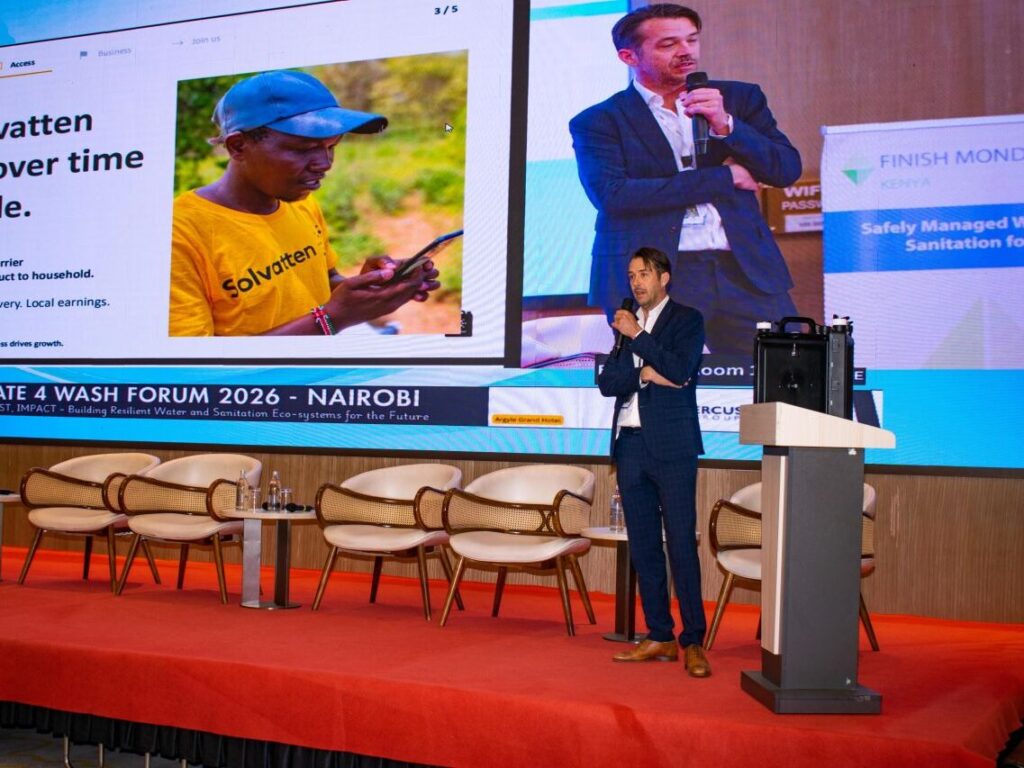
Solar-powered water treatment technology is emerging as an alternative for Kenyan households struggling with access to safe drinking water, as innovators seek to expand solutions that reduce dependence on electricity, firewood and charcoal.
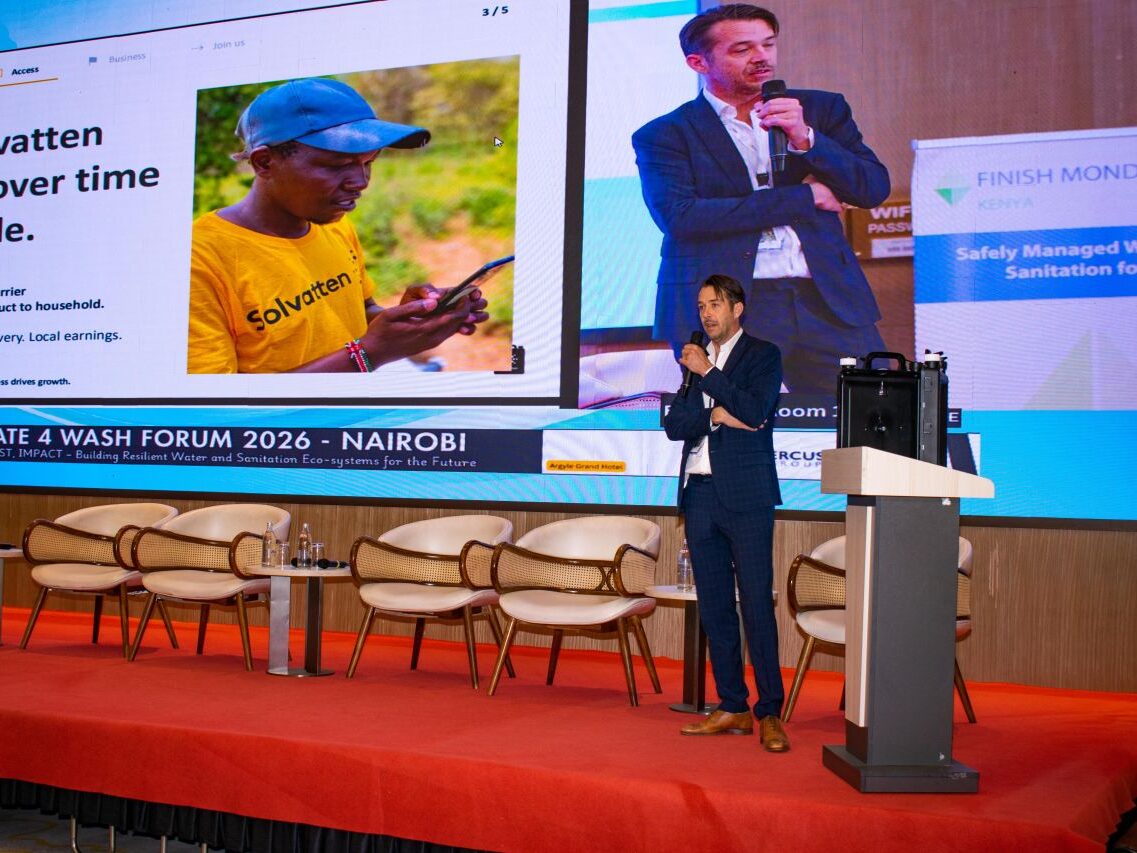
The technology was among the innovations showcased at the Innovate4WASH Marketplace Forum in Nairobi, where Swedish social enterprise Solvatten engaged government representatives, development organisations, financial institutions and entrepreneurs on opportunities to expand access to safe and heated water.
Solvatten representatives Nina Plöen Stenström and Klara Elzvik Nyström introduced the company’s technology to key stakeholders, including Laikipia Governor Joshua Irungu, who visited its exhibition stand following the opening session.
The discussions also brought together representatives from Millennium Water Alliance, Water.org, the Ministry of Water, Sanitation and Irrigation, Kenya Youth Parliament for Water, SolarGen, Family Bank and Equity Bank, among other participants.
The engagement focused on connecting water technologies with everyday household needs, particularly drinking, cooking, washing and maintaining family hygiene.
The four-day Innovate4WASH forum, held from October 28 to 31, 2026, at the Argyle Grand Hotel in Nairobi, brought together water-sector leaders, investors, development partners, utilities and innovators to explore financing and technology solutions for water and sanitation challenges.
Solvatten’s technology combines water purification and solar heating in a portable container designed for households with limited access to reliable water and energy infrastructure.
The system uses ultraviolet radiation and heat from sunlight to treat microbiologically contaminated freshwater. Each unit consists of two five-litre containers, providing a total capacity of 10 litres per treatment cycle. Users fill the containers and place them in direct sunlight, where the treatment process generally takes between two and six hours, depending on weather conditions.
An indicator on the device shows when the treatment process is complete. The system does not require electricity, batteries, chemical disinfectants or replacement filter cartridges, making it particularly relevant to off-grid communities.
However, the technology is designed primarily to address microbiological contamination. It does not remove chemical pollutants such as fluoride, salt and heavy metals, meaning water affected by these contaminants requires additional treatment.
Solvatten’s technology has previously been introduced in Nairobi’s informal settlements, where it was promoted as an alternative to conventional methods of heating and treating household water.
The initiative has also reached rural communities through partnerships with local organisations. In Taita Taveta County, the NextEnergy Foundation supported the distribution of Solvatten systems through its partnership with Community Action for Nature Conservation (CANCO).
The initiative initially distributed 170 kits in Taveta in 2024, targeting households facing water scarcity and unreliable piped water supplies. A subsequent expansion planned for 2025 involved increasing distribution to 792 units, targeting more than 2,500 people.
The approach also has environmental and economic implications. By reducing the need to boil water using firewood and charcoal, solar-powered treatment can lower household fuel expenses, reduce pressure on trees and limit exposure to smoke from traditional cooking fuels.
The Innovate4WASH engagement presents an opportunity to explore how partnerships with government agencies, development organisations and financial institutions could support wider adoption of decentralised water treatment technologies.
For Kenya, where access to reliable water infrastructure remains uneven, particularly in rural and underserved settlements, household-level solutions could complement investments in dams, treatment plants and distribution networks.
The challenge will be moving beyond technology demonstrations and establishing affordable distribution, financing and community support arrangements that enable more households to benefit.
The wider question for the water sector is how innovative technologies can be made affordable and accessible to households that continue to face difficulties obtaining safe water for their daily needs.