Kenya is seeking to strengthen its water infrastructure to support agricultural expansion, as the government intensifies efforts to increase irrigated land, improve food production and reduce dependence on increasingly unreliable rainfall.
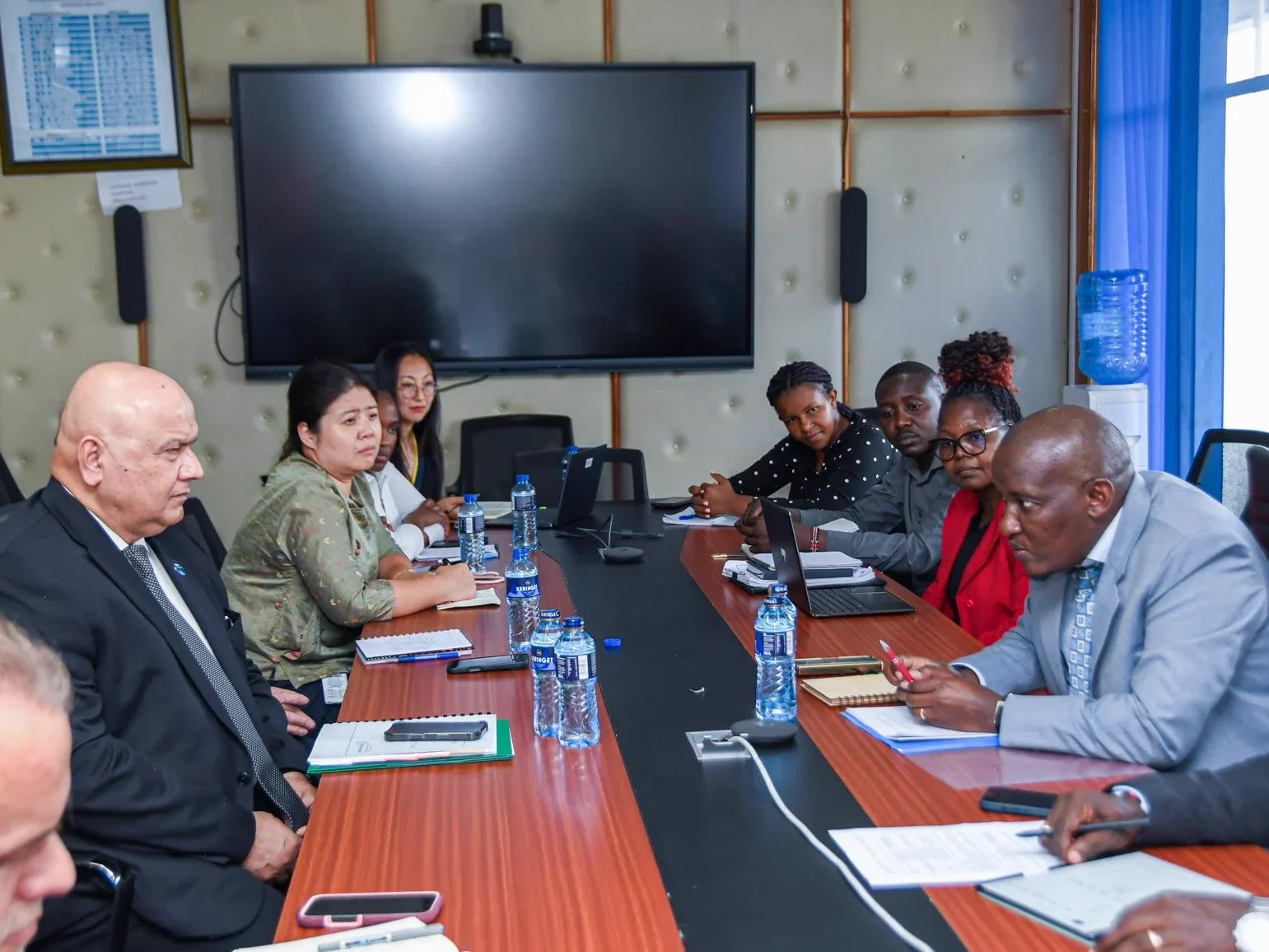
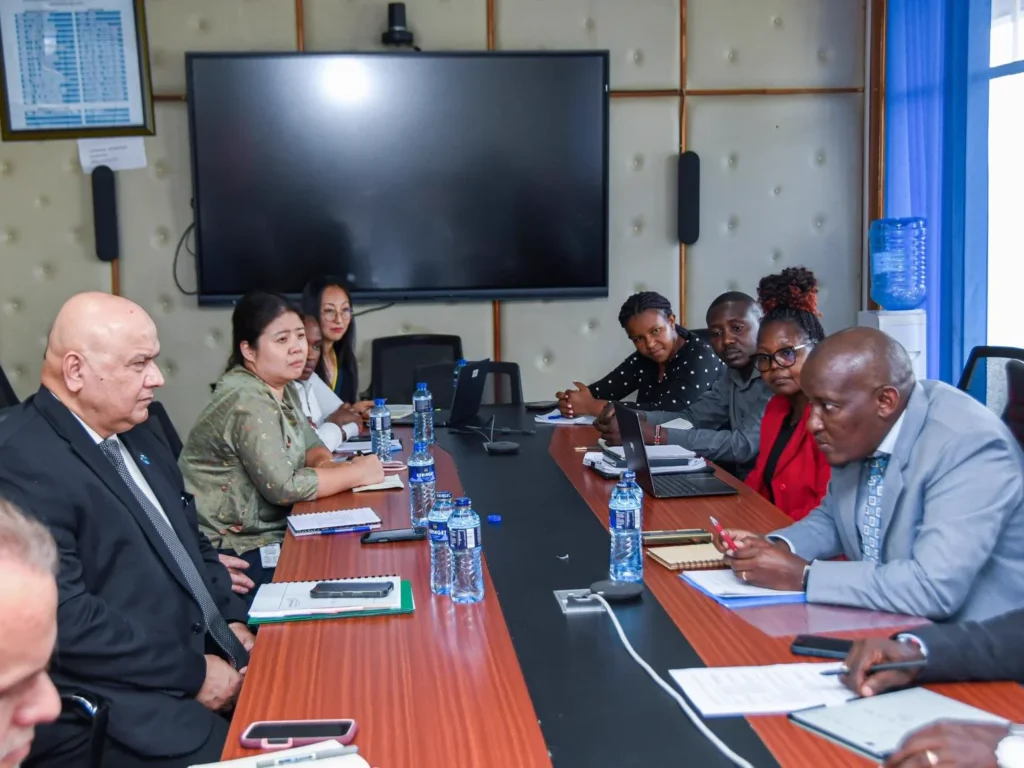
The importance of reliable water supplies featured prominently on Wednesday, November 11, 2026, when Principal Secretary for Irrigation Ephantus Kimotho held discussions with World Bank Global Director for Water Saroj Kumar Jha on accelerating the Kenya Resilient Irrigation for Sustainable Economy (KRISE) Programme.
The meeting focused on fast-tracking outstanding processes, improving coordination among implementing institutions and ensuring that planned investments translate into tangible benefits for farmers.
The engagement comes as Kenya seeks to expand irrigation infrastructure while addressing longstanding challenges involving water storage, access to financing, irrigation technology and sustainable management of water resources.
Agriculture remains heavily dependent on rainfall, exposing farmers to production disruptions during prolonged dry spells. Expanding irrigation is therefore considered an important intervention in improving agricultural resilience, stabilising food production and supporting farmers to cultivate throughout the year.
The National Irrigation Sector Investment Plan (NISIP) 2025–2035 provides the long-term framework for this expansion, targeting 1.5 million acres under irrigation by 2030. Its priorities include farmer-led irrigation, modernisation of public schemes, groundwater development, commercial agriculture and community-managed irrigation systems.
A major consideration in achieving these targets is the availability of sufficient water to sustain agricultural production. This requires investments beyond irrigation canals and farm equipment to include dams, reservoirs, water pans, groundwater infrastructure and efficient distribution networks.
One of the significant investments supporting this approach is the Thiba Dam in Kirinyaga County, which provides water storage for the Mwea Irrigation Scheme and supports rice production. The dam has a storage capacity of approximately 15.5 million cubic metres and is part of wider investments aimed at improving water availability for irrigation.
In Tana River County, the Bura Irrigation Scheme is undergoing infrastructure improvements intended to strengthen water delivery and increase agricultural production. Rehabilitation works include a 25-kilometre canal, diversion infrastructure, a head regulator and a siltation basin, with the scheme targeting improved water supply across approximately 20,000 acres.
Western Kenya is also benefiting from irrigation investments through the Lower Nzoia Irrigation Project, which is intended to improve agricultural production and strengthen water security in the region.
Other important investments include the Lower Kuja Irrigation Scheme in Migori County and the Galana-Kulalu irrigation development, which seeks to unlock agricultural potential in the coastal region.
Alongside large-scale infrastructure, community water storage facilities are increasingly important in areas where farmers depend on seasonal rainfall.
During the 2024/2025 financial year, the irrigation sub-sector reported the construction and rehabilitation of 76 community water pans with a combined capacity of approximately 5.2 million cubic metres. A further 1,545 household water pans added about 2.17 million cubic metres of storage capacity.
These facilities provide opportunities for communities to capture and store rainwater for agricultural activities, particularly in arid and semi-arid areas where prolonged dry periods constrain farming.
Groundwater development is another important part of the country’s irrigation strategy. However, expanding abstraction must be supported by proper aquifer assessments, monitoring and sustainable management to prevent depletion of underground water resources.
The KRISE Programme is expected to bring together several of these priorities through four major components: Farmer-Led Irrigation Development, High Performance Public and Community Irrigation Schemes, Water Security and Climate Resilient Landscapes, and Sector Coordination.
The proposed US$346.5 million programme targets 60,000 hectares of new or improved irrigation land, alongside 800,000 additional or better-paid jobs and improved food and nutrition security for 1.5 million people.
Farmer-Led Irrigation Development is particularly important because it seeks to expand irrigation beyond large government-managed schemes by enabling individual farmers and organised groups to invest in and manage their own irrigation systems.
The approach also recognises the need for financial institutions, irrigation equipment suppliers, technical experts and agricultural market players to participate in expanding smallholder irrigation.
Kenya has already been pursuing partnerships with financial institutions to support this model, including financing arrangements involving Equity Bank and the State Department for Irrigation in the Mount Kenya region.
The latest government engagement with the World Bank therefore comes at an important stage in the country’s irrigation expansion agenda. Beyond mobilising financing, effective implementation will require stronger coordination between national and county governments, irrigation institutions, farmers and development partners.
For Kenya, expanding irrigated agriculture will depend on the ability to develop reliable water sources, improve existing infrastructure and ensure that available water is used efficiently.
The country’s food-security ambitions will ultimately depend not only on how much land is brought under irrigation, but also on whether sufficient and sustainable water supplies are available to support production throughout the year.