Kenya is seeking increased climate financing to expand affordable green technologies aimed at improving water access in underserved communities, particularly in arid and semi-arid regions where conventional water infrastructure is expensive to develop and maintain.
The country showcased several of these innovations at the ongoing United Nations climate change conference (COP31) in Antalya, Türkiye, where the Water Sector Trust Fund (WaterFund) highlighted how low-cost solutions can strengthen water security and help communities cope with drought and changing rainfall patterns.
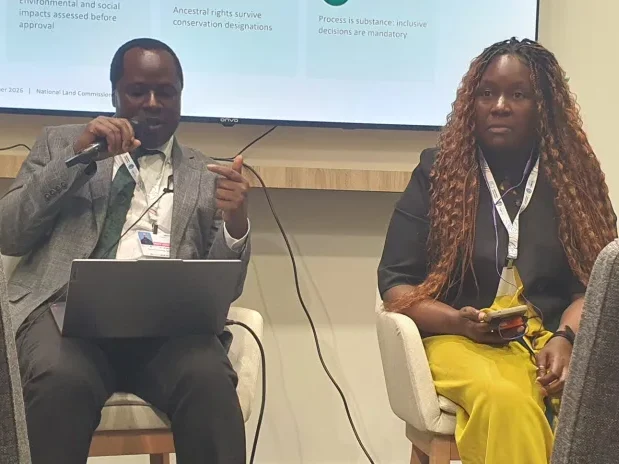
The technologies were presented during a side event titled Catalysing Low-Cost Green Technologies for Sustainable Water Service Delivery in Kenya. The discussions focused on how affordable technologies, alternative financing and partnerships can improve access to reliable water supplies.
WaterFund Principal Programme Officer for Climate Change Ann Nabangala said the initiative began with research into why some water projects failed to remain operational and sustainable after implementation.
“It started as a small project to research into why things are not sustainable. We studied technologies and made recommendations. It is not just about technologies but we need to catalyse climate finance,” Nabangala said.
She explained that although several technologies had demonstrated their potential to improve water services, additional resources were required to expand their application and reach more communities.
Among the technologies assessed were solar-powered water pumping systems, wind-powered pumping systems, sand dams, djabias and water pans.
Solar and wind-powered pumping systems use renewable energy to move water from available sources, reducing dependence on conventional electricity and fuel-powered equipment. They can help lower operating costs, particularly in remote areas without reliable electricity connections.
Sand dams provide another water storage option by trapping sand along seasonal river channels. The accumulated sand retains water underground, making it available during dry periods while reducing losses through evaporation.
Djabias, which are traditional underground or semi-underground water storage structures, provide opportunities for harvesting and conserving rainwater. Water pans capture surface runoff and store it for domestic, livestock and other uses, depending on their design and water quality.
A feasibility assessment supported by the Climate Technology Centre and Network examined the technical, economic, social and environmental suitability of these technologies. It also considered installation costs, maintenance requirements, local skills, employment opportunities and opportunities for private-sector participation.
Research in Kenya’s dryland areas has also highlighted the importance of ensuring that water infrastructure delivers benefits beyond construction.
A study examining 97 sand dams found that most contained water during the dry season. However, only 43 per cent had active water harvesting, while agricultural activities were recorded next to 39 per cent of the dams.
The findings demonstrate that constructing water storage facilities does not automatically translate into improved agricultural production or livelihoods. Effective management, water distribution systems and community participation are equally important in ensuring that infrastructure delivers lasting benefits.
Solar-powered pumping has also demonstrated potential in Makueni County, where renewable energy systems have helped farmers access water stored in sand dams and farm ponds. Combining water storage with solar pumping can support agricultural activities while reducing dependence on conventional energy sources.
WaterFund is working with county governments and development partners to support the adoption of climate-resilient water infrastructure through its financing programmes.
The fund’s 2023–2027 Strategic Plan identifies solar-powered water schemes, gravity-fed systems, water pans and other climate-resilient infrastructure as important interventions for improving water and sanitation services.
Its approach also incorporates catchment conservation and increased water storage capacity to strengthen communities’ ability to withstand climate-related pressures.
WaterFund receives support from several development partners, including the governments of Sweden, Denmark and Finland, the European Union, KfW, the World Bank, the International Fund for Agricultural Development, the Saudi Fund for Development, Kenya Markets Trust and Water and Sanitation for the Urban Poor.
Before adopting a green technology, the fund assesses its feasibility and suitability for the intended location. The process also examines opportunities for private-sector participation and public-private partnerships, with business models developed to identify appropriate financing arrangements.
The financing challenge comes as Kenya faces growing pressure to expand water services in drought-prone counties while strengthening resilience to changing rainfall patterns.
For communities in northern and eastern Kenya, where water sources are often distant and unreliable, decentralised technologies offer an opportunity to improve access without relying exclusively on large infrastructure projects.
However, expanding their use will require sustained investment, technical capacity, community involvement and clear arrangements for operating and maintaining facilities after construction.
Kenya’s presentation at COP31 highlights the need to connect climate financing with practical water solutions that can deliver reliable supplies, support livelihoods and strengthen resilience in vulnerable communities.