







Kenya is advancing plans to develop a large-scale seawater desalination plant in Lamu County, in an investment expected to strengthen water security, support industrial expansion and provide a reliable supply of potable water to communities facing freshwater shortages.
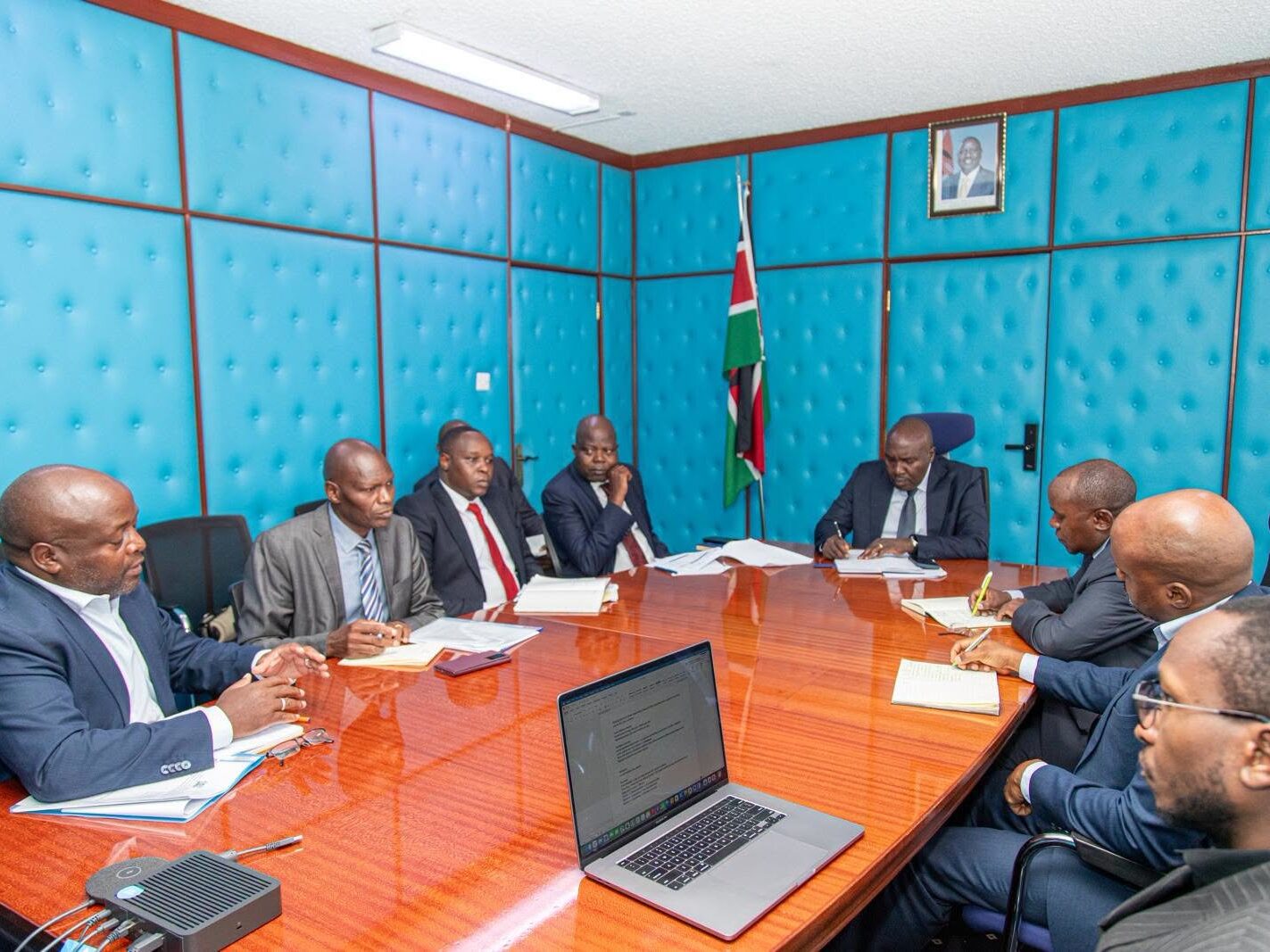
The proposed Lamu Water Desalination Project is progressing through the Public-Private Partnership (PPP) framework following a meeting between Principal Secretary for Water and Sanitation Julius Korir and representatives of Rasli Bahari Kenya Ltd, the project’s proponents.
The discussions focused on progress towards implementation, with the proposal undergoing processing through the Public-Private Partnerships Directorate at the National Treasury. The project is moving towards the contract negotiation stage, alongside preparations for preliminary works.
The proposed facility is expected to produce an initial 120,000 cubic metres of treated water daily, equivalent to 120 million litres, making it one of the major planned desalination investments in Kenya’s water sector. The supply is intended to serve Lamu Town, surrounding communities and areas associated with the Lamu Port-South Sudan-Ethiopia Transport (LAPSSET) Corridor.
According to project information published by the National Treasury’s PPP Directorate, the development has an estimated investment value of approximately KSh106.12 billion and will operate under a 30-year Build-Operate-Transfer (BOT) arrangement. Under this model, the private investor is expected to finance, construct and operate the facility before transferring it to the public sector in accordance with the agreed contractual terms.
The project is structured as a Privately Initiated Proposal, meaning it originated from a private-sector proponent and is being assessed through the government’s PPP approval and negotiation processes.
At the centre of the proposed development is seawater desalination technology, which involves removing dissolved salts and other impurities from ocean water to produce freshwater suitable for human consumption. The technology offers an alternative source of supply for coastal communities where conventional freshwater sources are limited or affected by salinity.
The proposed plant is expected to incorporate advanced reverse-osmosis systems. This technology uses specialised membranes to separate dissolved salts from seawater under high pressure. Pretreatment processes remove suspended particles and other materials that could damage or block the membranes, while post-treatment helps adjust the mineral composition and quality of the resulting water before distribution.
The project also includes mineral recovery, creating an additional commercial component through the processing and sale of products recovered during desalination. This could provide another revenue stream while improving the utilisation of resources generated by the treatment process.
For Lamu, the proposed investment addresses a significant water supply challenge. The county’s water sources include groundwater, seasonal rivers, dams, water pans and rainwater harvesting. However, groundwater in several areas is saline, limiting its suitability for direct domestic consumption without treatment.
The county has also relied heavily on rainwater and smaller water supply schemes, making reliable access to freshwater a challenge in some communities, particularly during prolonged dry periods.
The proposed desalination facility could reduce dependence on these limited freshwater sources while providing additional capacity to meet growing domestic and industrial demand.
Beyond household consumption, the project is strategically linked to the development of the LAPSSET Corridor, which is expected to stimulate port operations, transport infrastructure, logistics, manufacturing and other economic activities along the coast.
The proposed East Africa Oil Refinery is also among the industrial developments identified as potential beneficiaries of improved water infrastructure. Such facilities require dependable water supplies for operational processes, cleaning, cooling and other industrial activities.
However, the project’s large investment requirement means that financing arrangements, water tariffs, energy costs and long-term operational sustainability will be important considerations during negotiations. Desalination is generally energy-intensive, and the cost of pumping seawater, operating high-pressure systems and maintaining specialised membranes can influence the final price of treated water.
Its success will therefore depend on balancing the need to provide affordable water to households with the financial requirements of operating a large industrial treatment facility.
The project is being advanced as part of the Ministry’s broader approach to mobilising private-sector financing for water infrastructure, as public funding alone remains insufficient to meet the country’s investment requirements.
Korir has emphasised the importance of expediting the outstanding processes to facilitate timely implementation, noting that the project could strengthen water security, support economic growth and unlock Lamu County’s development potential.
Once implemented, the facility would add a new source of freshwater to Kenya’s coastal water supply infrastructure. However, its eventual impact will depend on the completion of negotiations, financial arrangements, construction, distribution networks and eff