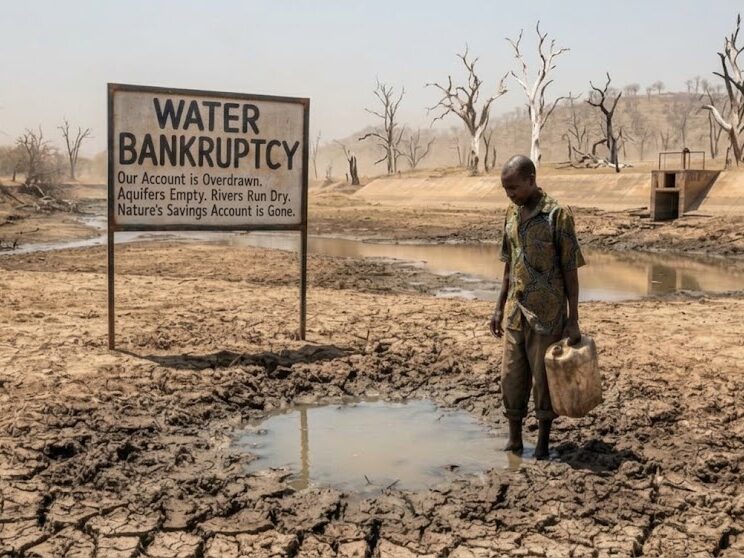

Water experts are increasingly warning that the global water challenge goes beyond seasonal shortages, with growing concern that some regions are using freshwater faster than natural systems can replenish it. The concept of “water bankruptcy” is drawing attention to the long-term consequences of overusing rivers, lakes, wetlands and underground water reserves.
The term describes a situation in which societies repeatedly consume more water than nature can sustainably replace, while damaging the ecosystems that store, filter and regulate freshwater. Unlike a temporary water crisis caused by drought, water bankruptcy suggests that some systems may have suffered lasting damage that makes returning to previous conditions difficult.
A January 2026 report by the United Nations University Institute for Water, Environment and Health highlighted the growing risks associated with depleted water reserves and damaged natural ecosystems. The report argues that water management must move beyond emergency responses towards protecting the natural assets on which long-term water security depends.
The concept can be understood by comparing water resources to a bank account. Rainfall and other renewable flows represent income, while aquifers, wetlands, rivers and lakes act as reserves. When withdrawals consistently exceed replenishment, those reserves decline, leaving communities more vulnerable to drought and changes in rainfall.
Groundwater is particularly important because it supports drinking water supplies, agriculture and economic activities in many parts of the world. The United Nations World Water Development Report 2022 noted that groundwater accounts for approximately 99 per cent of the Earth’s liquid freshwater, making it a vital resource for human development and environmental sustainability.
However, excessive abstraction, pollution and inadequate management can threaten the long-term availability of this resource. Wetlands and forests also play important roles in regulating water flows, supporting groundwater recharge and maintaining the health of rivers and other aquatic ecosystems.
In Kenya, these concerns are relevant as population growth, urbanisation, changing rainfall patterns and competing demands place pressure on water resources. The Ministry of Water has identified catchment degradation, groundwater overuse, poor land-use practices and pollution as challenges affecting the country’s water security.
The Water Resources Authority regulates water abstraction through permits intended to promote equitable allocation and sustainable use. Its groundwater management responsibilities also include protecting recharge areas, controlling contamination and encouraging responsible borehole development.
Addressing the risk of water bankruptcy therefore requires more than constructing dams, drilling boreholes or developing additional supply infrastructure. Protecting catchments, restoring wetlands, reducing pollution, monitoring groundwater levels and enforcing water-use limits are equally important.
Communities, government agencies, farmers, industries and water service providers all have a role in conserving water resources. Better planning and reliable information can help decision-makers balance present needs with the capacity of natural systems to replenish supplies.
Ultimately, the water bankruptcy debate raises an important question: how can societies secure enough water for future generations without exhausting the natural systems that sustain it? Long-term water security will depend not only on how much water people can extract, but also on how effectively they protect and restore the sources that provide it.