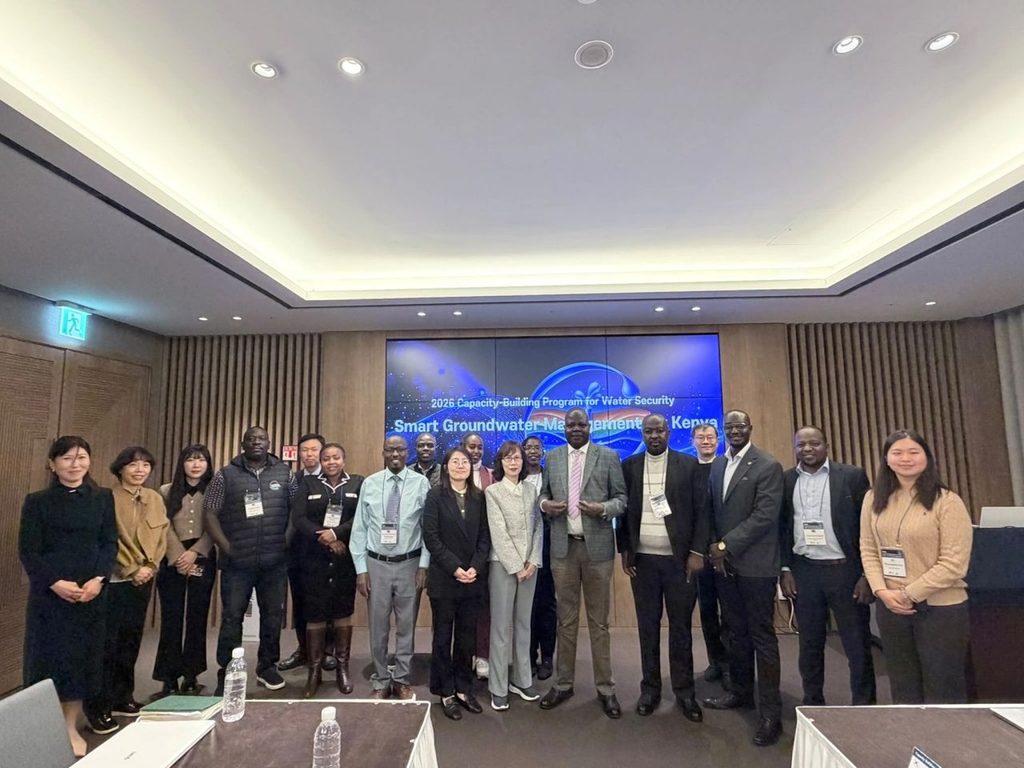
Kenya is strengthening cooperation with South Korea to improve groundwater management through digital technologies, aquifer recharge systems and modern water monitoring approaches as the country seeks to expand reliable water supplies and build resilience to climate change.
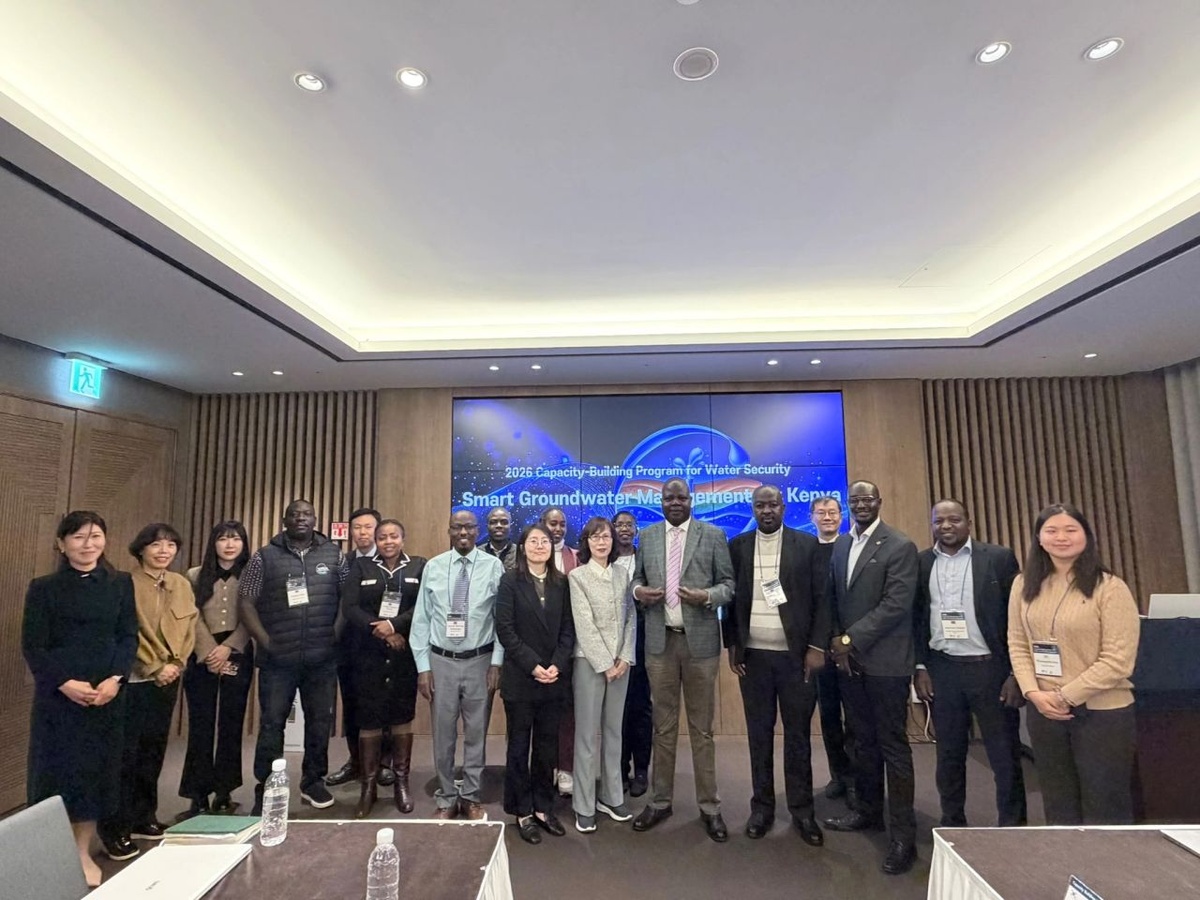
A Kenyan delegation led by Water Secretary Eng. S.A.O. Alima participated in a five-day Capacity Building Programme on Smart Groundwater Management for Water Security held in South Korea from November 9 to 13, 2026.
The programme was organised through collaboration between the Regional Centre on Groundwater Resources Education, Training and Research (RCGW) and the International Centre for Water Security and Sustainable Management under the auspices of UNESCO (i-WSSM).
The delegation brought together senior managers and water-sector professionals from the State Department for Water and Sanitation, RCGW and the Water Resources Authority (WRA).
The training focused on exchanging technical knowledge and exposing Kenyan officials to South Korea’s experience in groundwater development, monitoring and sustainable management.
The discussions covered sustainable groundwater development, Managed Aquifer Recharge (MAR), smart water supply systems, wastewater management, agricultural water use and digital water technologies.
A key area of interest was the use of technology to improve groundwater monitoring and management. These approaches include real-time monitoring stations, smart metering and digital information systems that help authorities track water abstraction, assess aquifer conditions and make informed decisions on resource allocation.
The training comes at a time when sustainable groundwater management is becoming increasingly important to Kenya’s water security. Groundwater supports domestic water supply, agriculture and economic activities, particularly in arid and semi-arid regions where rivers and other surface-water sources are unreliable.
However, the resource faces growing pressure from increased abstraction, limited monitoring and changing climatic conditions. Over-extraction threatens aquifer sustainability, while inadequate monitoring makes it difficult for authorities to establish how much groundwater is available and how quickly it is being depleted.
One of the approaches highlighted in the programme, Managed Aquifer Recharge, involves deliberately directing suitable water into underground formations for storage and future use. It can help replenish groundwater reserves, improve water security and provide an additional buffer during prolonged dry periods.
Kenya has been pursuing this approach through groundwater assessments and recharge initiatives, including work on the Nairobi Aquifer System. Such initiatives are intended to improve understanding of underground water reserves and identify opportunities for storing excess water for use during dry periods.
The cooperation with South Korea also builds on Kenya’s wider groundwater development agenda under the Horn of Africa Groundwater for Resilience Project, which seeks to strengthen aquifer assessments, groundwater monitoring networks and institutional capacity.
The RCGW–i-WSSM partnership is expected to contribute to technology transfer, research collaboration and professional development, helping Kenyan institutions apply lessons from international experience to local water management challenges.
Ultimately, the programme reinforces the importance of combining infrastructure investment, scientific research and digital technologies to protect groundwater resources and secure reliable water supplies for future generations.