









Kenya’s ambition to strengthen food security through irrigation is increasingly dependent on its ability to mobilise long-term financing for water storage, distribution infrastructure and modern farming technologies. As rainfall patterns become less predictable and agricultural demand rises, investment in water resources is emerging as a critical part of the country’s strategy to improve food production and reduce reliance on rain-fed agriculture.
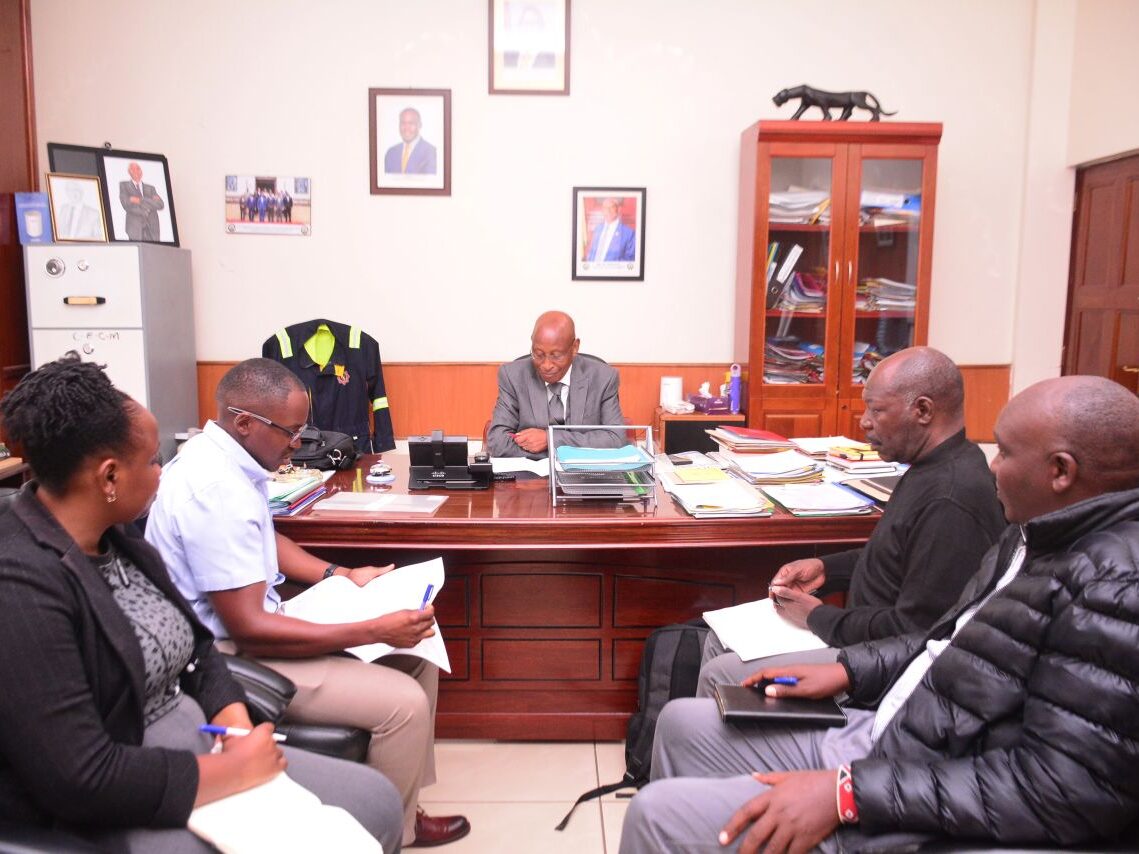
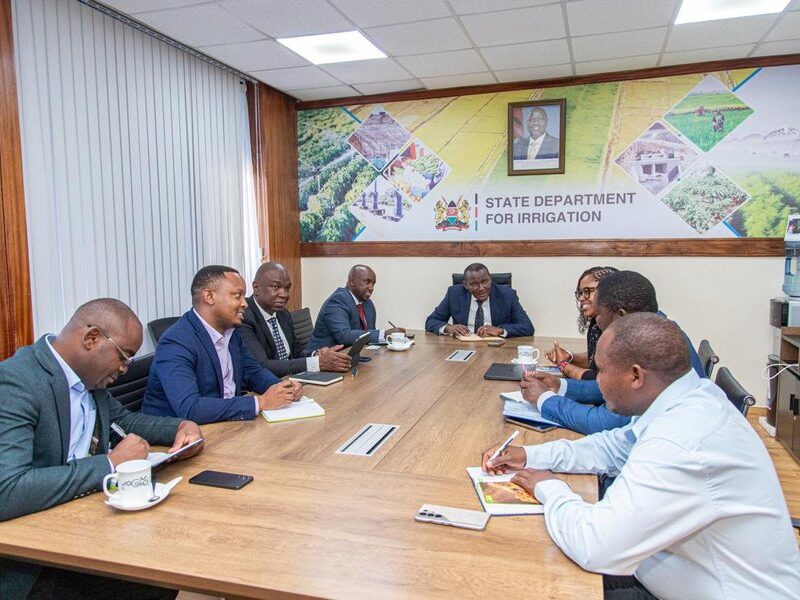
The financing challenge came into focus on Monday, November 9, 2026, when Principal Secretary for Irrigation CPA Ephantus Kimotho held a consultative meeting with a delegation from KCB Bank led by Peter Ngeno, the bank’s Director of Corporate Banking, to explore opportunities for financing major irrigation investments.
Discussions centred on the National Irrigation Sector Investment Plan (NISIP), particularly Farmer-Led Irrigation Development (FLID) and large-scale commercial irrigation projects, including the Bura Irrigation Scheme and Galana-Kulalu Food Security Project.
A key proposal involved potential KCB support for commercial financing of the proposed Galana Athi Dam and the development of innovative financial solutions to attract investors to the 350,000 acres targeted for development under the Galana-Kulalu initiative.
The discussions also examined how the bank could expand access to affordable agricultural financing for smallholder farmers and support the mobilisation of private capital through instruments such as green bonds.
The engagement reflects a growing recognition that government budget allocations alone may not be sufficient to deliver the infrastructure required to expand irrigation across the country.
Agriculture remains a major pillar of Kenya’s economy, supporting millions of livelihoods and contributing significantly to national output. However, much of the country’s agricultural production still depends on rainfall, leaving farmers exposed to prolonged dry spells, changing weather patterns and unreliable water availability.
Kenya has an estimated irrigation potential of 3.5 million acres, but only a fraction has been developed. The government is therefore pursuing NISIP, a long-term framework intended to expand irrigation coverage, improve existing schemes and attract investment into agricultural water infrastructure.
The government has set a target of increasing irrigated land to approximately 1.5 million acres over the next decade, making financing one of the central requirements for achieving the expansion.
Under the investment framework, private-sector participation is expected to account for a significant share of the required resources, with commercial banks, agricultural investors, development finance institutions and equipment suppliers expected to support infrastructure development and farm-level investments.
One of the central priorities is Farmer-Led Irrigation Development, which seeks to enable smallholder farmers to invest in and manage their own irrigation systems. The approach recognises that farmers need access not only to water but also to affordable equipment, credit and technical support.
For many small-scale farmers, the initial cost of acquiring water pumps, drip irrigation systems, storage facilities and distribution equipment remains a major barrier. Commercial banks can help address this challenge by developing agricultural credit products suited to the repayment capacity and production cycles of farmers.
The proposed partnership with KCB could therefore provide an opportunity to connect financial institutions with farmers and commercial investors seeking to develop irrigation infrastructure.
Water storage is another important component of the country’s irrigation ambitions. Expanding irrigation without developing adequate water sources, reservoirs and distribution networks could place additional pressure on already stressed water resources.
Large infrastructure projects such as the proposed Galana Athi Dam are expected to play an important role in supporting commercial agricultural production. The project is linked to the wider Galana-Kulalu Food Security Project, which seeks to develop large tracts of land for irrigated farming.
The National Irrigation Authority has outlined plans for a dam with a storage capacity of approximately 305 million cubic metres, alongside water conveyance infrastructure intended to support irrigation expansion across as much as 300,000 acres.
The project is particularly important because reliable water supplies are necessary to sustain agricultural production throughout the year, especially in areas where rainfall is insufficient or unpredictable.
The Bura Irrigation Scheme in Tana River County is another example of the importance of investing in existing water infrastructure. Rehabilitation, improved water delivery and modern farming technologies can help existing schemes increase production and improve farmers’ incomes.
However, irrigation expansion must be accompanied by sustainable water resource management. Increased abstraction from rivers and reservoirs requires proper planning, monitoring and efficient distribution to ensure that agricultural demand does not undermine other water users or the long-term availability of freshwater.
Financing mechanisms such as blended finance, credit guarantees, public-private partnerships and green bonds could help distribute investment risks and attract institutions that might otherwise be reluctant to fund large infrastructure projects.
Green bonds, in particular, could provide an avenue for raising capital for environmentally sustainable investments, including water storage, efficient irrigation systems and climate-resilient agricultural infrastructure.
The relationship between water investment and food security is becoming increasingly important as Kenya seeks to reduce dependence on imported food and improve domestic agricultural production.
Reliable irrigation can enable farmers to plan production more consistently, diversify crops and supply markets beyond traditional rainy seasons. It can also support agricultural processing, transport, storage and rural employment.
Nevertheless, attracting capital will not automatically guarantee successful projects. Financial institutions will need viable investment proposals, clear repayment arrangements and mechanisms to manage agricultural risks. Farmers will also require access to markets, insurance, affordable inputs and technical assistance.
Kimotho said mobilising private capital, developing bankable projects and reducing investment risks would be critical to transforming the irrigation sector.
The engagement with KCB therefore represents part of a wider government strategy to bring financial institutions into the country’s irrigation expansion programme, with the ultimate objective of turning water infrastructure into a foundation for increased agricultural production and long-term food security.