Kenya continues to invest billions of shillings in dams, water treatment plants, reservoirs and distribution pipelines, but millions of households still struggle to access reliable water supplies, exposing a widening gap between infrastructure development and actual service delivery.
Despite the construction of major water projects across the country, the challenge of ensuring that treated water reaches consumers remains one of the biggest obstacles facing the water sector.
The latest Water Services Regulatory Board (WASREB) performance report for the 2024/2025 financial year shows that water production increased by 9.4 per cent, while the volume of water billed grew by only 2.3 per cent.
The report further places non-revenue water at 48 per cent, meaning that almost half of the water entering utility distribution systems does not generate revenue for service providers.
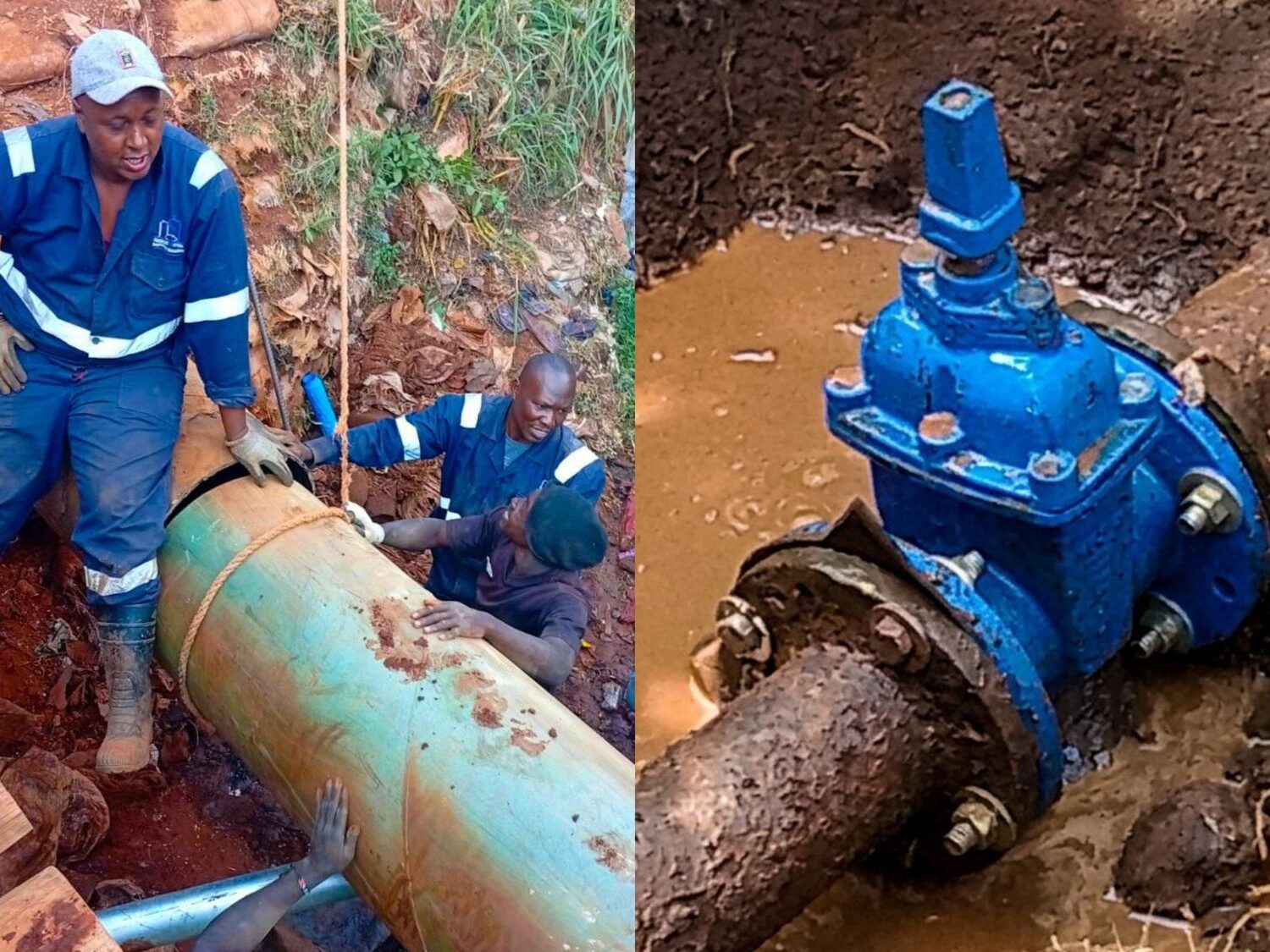
Non-revenue water includes physical losses through leaking pipes, commercial losses such as inaccurate metering and illegal connections, as well as authorised consumption that is not billed.
The figures illustrate why increasing water production alone cannot resolve shortages if utilities cannot efficiently distribute, account for and collect revenue from the water they produce.
During the reporting period, the population within regulated service areas increased by 2.1 per cent to 31.6 million, while the number of people receiving water services rose by 5.9 per cent to 22.8 million.
Although this represents progress, per capita water consumption remained at 26.7 litres per person daily, reflecting the continued pressure on service delivery.
The regulator also reported that water connections grew by 1.3 per cent, below population growth, indicating that the expansion of household connections is not keeping pace with demand.
The challenge is compounded by the substantial investment required to expand infrastructure and improve existing systems.
Under the National Water and Sanitation Investment and Financing Plan (NAWASIP) covering 2023 to 2030, Kenya requires approximately KSh995 billion to achieve its water and sanitation targets.
However, the sector faces a financing gap of approximately KSh652 billion, highlighting the limitations of relying on conventional government allocations and development assistance alone.
The funding is required for new water sources, treatment facilities, transmission pipelines, storage infrastructure, sewerage networks and household connections.
The government has consequently been exploring public-private partnerships, blended financing and commercial investment to mobilise additional resources for water infrastructure development.
However, securing additional financing is only part of the solution. The performance of existing water utilities will also determine whether new investments translate into improved services.
WASREB’s findings show that operational inefficiencies and weak financial performance continue to affect many water service providers. Although sector revenue increased by 14 per cent to KSh32.9 billion during the reporting period, more than half of the utilities were still unable to fully cover their operating costs using internally generated revenue.
This limits their ability to maintain ageing infrastructure, repair leaking pipelines, expand distribution networks and invest in additional connections.
The challenge is particularly significant in rural, arid and underserved counties, where infrastructure remains limited and the cost of providing services can be considerably higher.
Major infrastructure projects such as Thwake Multipurpose Dam, the Northern Collector Tunnel, the Mwache Dam and other regional water supply schemes are expected to increase the country’s water storage and production capacity.
However, their long-term impact will depend on complementary investments in treatment, transmission, distribution and last-mile connectivity.
A completed dam, for instance, does not automatically provide water to households. Water must first be treated, transported through transmission infrastructure, stored in reservoirs and distributed through functioning networks.
The same applies to treatment plants whose output may remain underutilised where distribution pipelines and household connections are inadequate.
Water losses also represent an opportunity to improve supply without relying exclusively on expensive new water sources.
Reducing non-revenue water would allow utilities to recover more of the water already produced, improve revenue collection and create additional resources for infrastructure maintenance and expansion.
The World Bank has previously identified improved utility creditworthiness, operational efficiency and reduction of water losses as important measures for attracting private financing and strengthening service delivery.
Its Kenya Water, Sanitation and Hygiene Programme also supports reforms aimed at improving the financial and operational performance of water service providers.
For Kenya to achieve universal access to water and sanitation by 2030, the focus will therefore need to shift beyond the number of projects launched or completed towards how effectively infrastructure serves consumers.
This means strengthening accountability among water agencies, improving coordination between national and county governments, addressing distribution losses and ensuring that every major investment includes a clear plan for connecting households.
Ultimately, the success of Kenya’s water infrastructure expansion will not be determined simply by the number of dams, treatment plants or kilometres of pipelines constructed, but by whether more households receive sufficient, safe and reliable water.