







When a household receives its monthly water bill, the amount charged is often viewed simply as the cost of water consumed. However, behind every approved water tariff is a regulatory process involving water service providers, county governments, consumers and the national water regulator. The charges are intended not only to pay for the water supplied but also to support treatment, distribution, maintenance and expansion of water infrastructure.
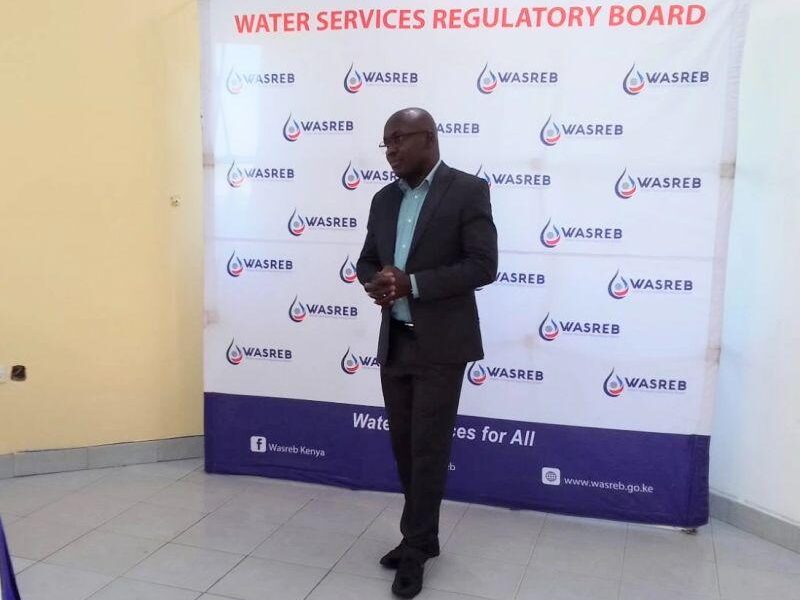
In Kenya, water tariffs are regulated by the Water Services Regulatory Board (WASREB), which is responsible for protecting consumers while ensuring that water service providers remain financially capable of delivering reliable services. Its mandate is provided under the Water Act, 2016, which establishes the regulatory framework for water services and consumer protection.
This means that a water company cannot simply decide to increase the price of water and begin charging customers at the new rate without following the required regulatory procedures. Tariffs must be justified, assessed and approved by WASREB.
The process begins when a water service provider determines that its existing tariff is no longer sufficient to meet the cost of delivering services or that a review is necessary to improve its financial and operational performance. The provider prepares a tariff application setting out its financial position, operating costs, water production and distribution expenses, revenue projections, investment requirements and proposed charges for different categories of customers.
The application is then subjected to a review by WASREB, which examines whether the proposed charges are reasonable and supported by evidence. The regulator assesses the provider’s operational efficiency, financial performance, cost of supplying water, affordability of the proposed rates and the quality of services delivered to customers. It also considers whether the utility is losing significant amounts of treated water through leakages, illegal connections and inaccurate metering.
Public participation is another important stage in the tariff-setting process. Consumers, county governments, residents and other stakeholders are given an opportunity to examine proposed tariff changes and present their views. This allows customers to question proposed increases, raise concerns about affordability and demand explanations about the quality and reliability of services they receive.
During these consultations, consumers can raise issues such as irregular water supply, poor water quality, inadequate sewerage services and whether proposed increases correspond with improvements in service delivery. The feedback helps inform the regulatory decision.
After reviewing the application and public submissions, WASREB may approve the proposed tariff, introduce amendments or attach conditions to the approval. The water service provider is expected to implement only the authorised charges. Consumers and other affected parties who are dissatisfied with a tariff decision may also pursue the available appeal mechanisms.
But how does the regulator determine what different customers should pay?
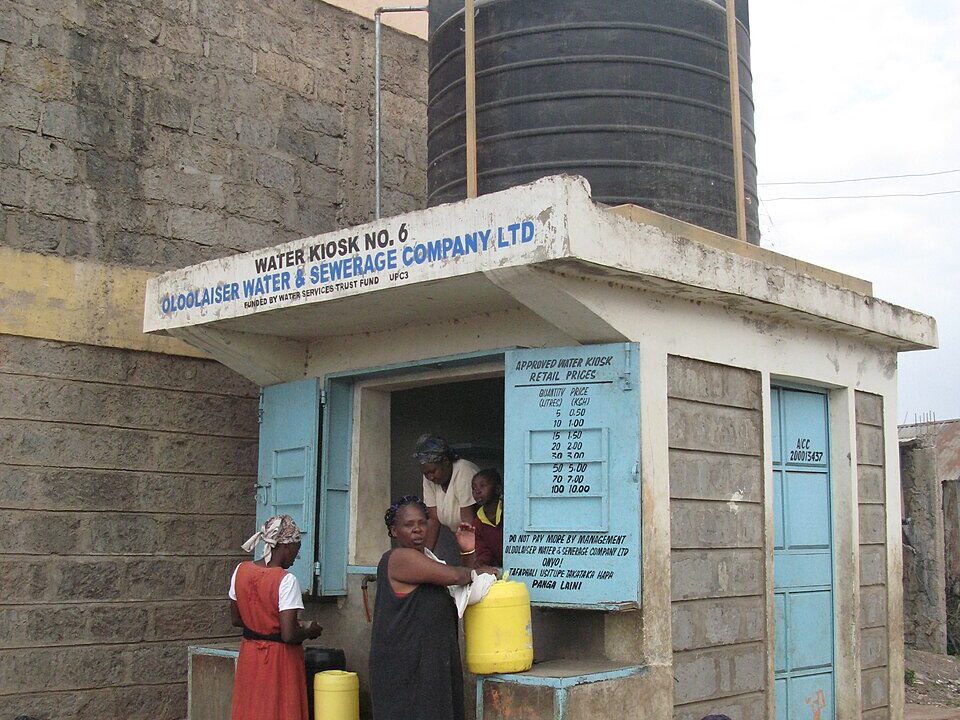
Kenya’s water tariff system is structured around different customer categories and consumption levels. This means that households, commercial establishments, industries, government institutions, schools and water kiosks may not necessarily pay the same rate for every cubic metre of water consumed.
For domestic consumers, tariffs commonly use consumption blocks, where the price per cubic metre increases as water usage rises. The idea is to make basic water consumption more affordable while discouraging excessive use of the resource.
A typical domestic tariff structure can be divided into consumption bands such as 1–6 cubic metres, 7–20 cubic metres, 21–50 cubic metres, 51–100 cubic metres, 101–300 cubic metres and above 300 cubic metres. The actual prices assigned to these bands depend on the approved tariff for each water service provider.
Commercial and industrial consumers have different tariff structures because their water requirements and economic activities differ from those of ordinary households. Institutions such as schools and public facilities may also have specific categories to accommodate their service needs.
Other categories include multi-dwelling residential developments, water kiosks, public standpipes and bulk water customers. These distinctions are intended to promote fairness while ensuring that different users contribute appropriately towards the cost of providing water services.
The differences can be seen in the approved tariff structure for Eldoret Water and Sanitation Company (ELDOWAS), which applies to the 2026/2027 to 2028/2029 period. Under the revised structure, domestic customers pay KSh84 per cubic metre for consumption of 1–6 cubic metres, KSh95 for 7–20 cubic metres and KSh110 for 21–50 cubic metres. The rate rises for customers with higher consumption. Commercial and industrial customers have a separate pricing structure, while public schools, colleges and universities have different consumption arrangements.
This demonstrates why customers in different towns may receive different bills even when they consume similar quantities of water. Each water service provider operates under its own approved tariff, reflecting its operating environment, infrastructure requirements and cost of delivering services.
Another important aspect of water tariffs is understanding what the money collected from customers actually pays for. Water service provision involves several stages, beginning with abstraction from rivers, dams, boreholes and other sources. The water must then be treated to meet drinking water standards before being pumped through pipelines, storage facilities and distribution networks to consumers.
Water companies also have to maintain treatment plants, repair leaking pipes, replace ageing infrastructure, operate pumping stations, pay electricity bills, employ technical personnel and conduct regular water quality tests.
The cost of recovering these expenses is an important consideration when tariffs are determined. Water utilities must generate sufficient revenue to cover daily operations, maintenance, debt obligations, infrastructure investment and replacement of ageing assets. This means that tariffs are intended to support both the daily running of water utilities and the longer-term development of infrastructure.
The investment component is particularly important because water providers need resources to extend pipelines, construct storage tanks, improve treatment facilities and connect communities that currently lack reliable supplies. Asset renewal, meanwhile, helps replace ageing pipes, pumps and other equipment that may compromise service delivery.
Where sewerage services are provided, customers may also pay separate sewerage charges. These support the collection, transportation and treatment of wastewater before it is safely discharged or reused. In some approved tariff structures, sewerage charges are calculated using a proportion of the customer’s water consumption, although the applicable method varies between providers.
Some utilities may also have approved sanitation levies and other authorised service charges. These should be clearly reflected in the applicable tariff arrangements so that consumers understand what they are paying for.
An important safeguard in Kenya’s tariff framework is the principle that revenue collected from water services should support the provision and improvement of water and sanitation services. This helps ensure that customer payments contribute towards the sustainability of the services they finance.
However, approving a tariff increase does not automatically guarantee better services. WASREB also monitors water service providers to establish whether they are meeting their performance obligations. Issues such as hours of supply, water quality, revenue collection, metering coverage and non-revenue water are important indicators of utility performance.
This is particularly significant in Kenya, where high levels of non-revenue water remain a challenge. When a utility produces treated water but loses a substantial proportion through leakages, illegal connections or commercial losses, it receives less revenue from the water it has already paid to produce and distribute. Reducing these losses can improve financial sustainability and reduce pressure to increase tariffs.
For consumers, understanding the approved tariff is equally important. A higher monthly bill does not always mean that the price of water has increased. It could also reflect higher consumption, a change in the applicable consumption band, an additional sewerage charge or another approved service fee.
Customers should therefore check their meter readings, consumption history and the applicable tariff schedule whenever they receive an unexpectedly high bill. They should also establish whether any additional charges appearing on their bills have been authorised.
Ultimately, setting water tariffs in Kenya involves balancing two important objectives: ensuring that households can afford essential water services while enabling water utilities to generate enough revenue to operate, maintain and expand their infrastructure. The challenge is to ensure that customers pay reasonable charges and, in return, receive reliable, safe and sustainable water and sanitation services.