







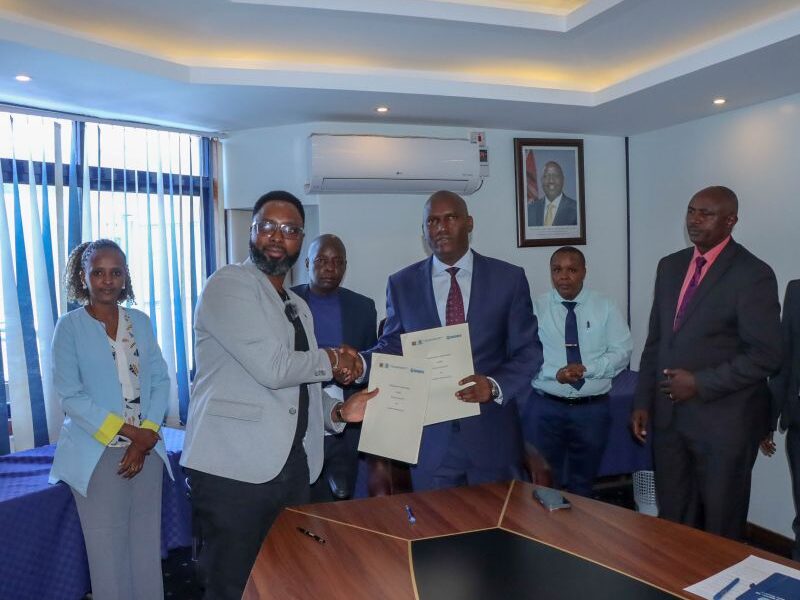
The Kenya Water Institute (KEWI) has partnered with Nuvemite Technology Ltd to accelerate digital transformation in laboratory management and water quality monitoring, in a move that could strengthen how Kenya’s water sector collects, manages and uses critical water-quality data.
Through a Memorandum of Understanding signed at KEWI’s headquarters, the partnership will deploy IMARA LIMS, a laboratory information management system, while strengthening quality assurance and quality control processes and supporting KEWI’s readiness for ISO/IEC 17025 accreditation. The collaboration will also introduce smart water quality monitoring, integrate geographic information systems (GIS) and remote sensing, and build the digital and technical capacity of KEWI staff and students through training, research and innovation.
The deal is important because Kenya’s water sector is increasingly dependent on reliable and timely data to monitor water quality, manage resources and respond to emerging risks. Moving laboratory processes from fragmented or manual systems to digital platforms can improve the traceability of samples, reduce errors, speed up access to results and make it easier for institutions to identify changes in water quality. The integration of GIS, remote sensing and real-time monitoring could further allow water-quality information to be linked to specific locations and environmental conditions, giving policymakers and water-sector institutions a more complete picture of what is happening on the ground.
For KEWI, the partnership also strengthens its role as a centre for technical training and innovation in Kenya’s water sector. Building staff and student capacity in digital laboratory management, data analysis and smart monitoring could help create a workforce better equipped to manage increasingly data-intensive water systems. The partnership could help turn water-quality data from information that is simply collected and stored into intelligence that can guide investment, regulation, public health decisions and day-to-day water management.