Kenya advances borehole monitoring to improve rural water safety
Water quality monitoring is emerging as an important part of efforts to improve access to safe drinking water in northern Kenya, where communities depend heavily on boreholes to meet their domestic needs.
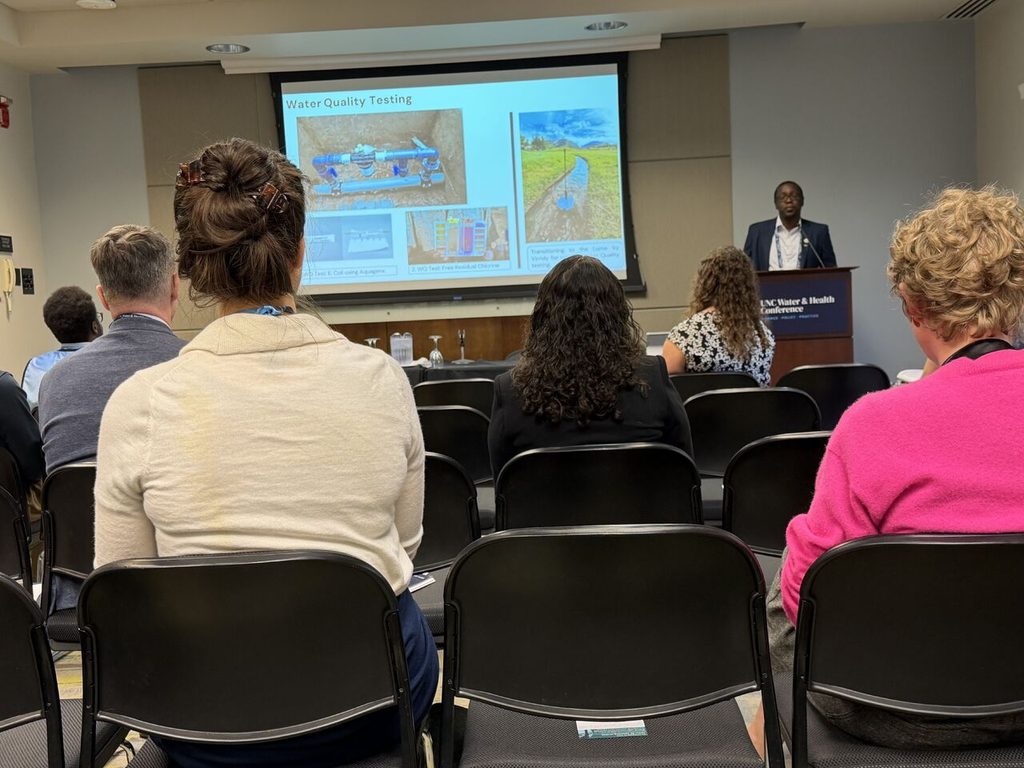
A project presented at the 2026 UNC Water and Health Conference has highlighted the importance of combining borehole maintenance with regular microbial testing to identify contamination risks from water sources to household consumption.
The initiative, involving the Millennium Water Alliance (MWA), examined operational improvements in a borehole maintenance programme in northern Kenya. The presentation was delivered by Styvers Kathuni and Johnson Nganga, focusing on how monitoring water quality can help strengthen the reliability and safety of rural water supplies.
The research is particularly relevant to northern Kenya, where boreholes are a critical source of water for households and livestock in counties such as Turkana, Marsabit, Wajir, Garissa and Isiolo. However, the reliability of these systems remains a challenge, with mechanical failures, delayed repairs and limited maintenance financing affecting water availability.
An earlier MWA assessment covering 264 borehole sites in northern Kenya found that motors accounted for 40.21 per cent of reported breakdowns, while submersible pumps represented 26.46 per cent. The average repair period was approximately 64 days, with Turkana recording the longest average at 75 days. These disruptions demonstrate why investment in borehole infrastructure must be accompanied by effective maintenance and water quality management.
The latest presentation also highlights another important challenge: water safety beyond the borehole itself. Testing water at the source alone may not reveal contamination introduced during transportation, storage and household handling. Examining water at different points along the supply chain helps identify where contamination occurs and whether community water-handling practices contribute to the problem.
This approach is important in rural Kenya, where households sometimes transport water in containers and store it before consumption. Poorly maintained storage containers, unhygienic collection practices and inadequate sanitation can expose otherwise safe water to contamination.
MWA is also implementing its Drought Resilience Impact Platform-Fixing Uptime Now and Decision Improvement (DRIP-FUNDI) programme in five northern counties. The initiative uses connected sensors, satellite information and groundwater monitoring to improve borehole management and anticipate water demand.
The programme targets 200 boreholes, with an objective of achieving an average operational uptime of 90 per cent, equivalent to approximately 11 months of service annually. It aims to improve reliable water access for 120,000 people while exploring carbon credit financing to support long-term maintenance.
The findings presented at the UNC conference reinforce the need for Kenya to treat water infrastructure maintenance and drinking water quality as connected priorities. Improving borehole functionality while monitoring microbial contamination could strengthen rural water services and reduce the risks associated with unsafe drinking water.