Explainer: Where does Kenya’s drinking water come from?
Kenya’s drinking water comes from a combination of rivers, dams, lakes, groundwater, springs and rainwater harvesting systems. Although the country has several natural water sources, access to safe and reliable drinking water depends on how these resources are protected, collected, treated and distributed to households.
The journey of drinking water often begins far from the homes where it is consumed. Water from rivers, catchment areas, underground aquifers and reservoirs is collected through different infrastructure systems before undergoing treatment to make it suitable for human consumption.
Kenya’s water supply also varies significantly across regions. While some urban centres depend largely on large dams and river systems, many rural and arid areas rely on boreholes, protected springs, shallow wells and community-managed water schemes. Understanding these sources helps explain why water availability differs across the country and why protecting water resources is important for public health, agriculture and economic development.
One of the largest sources of drinking water in Kenya is surface water. This includes rivers, lakes and water stored in dams and reservoirs. The country has six major drainage basins: Tana, Athi, Rift Valley, Lake Victoria North, Lake Victoria South and Ewaso Ng’iro North. These basins collect rainfall and channel water through rivers, streams and wetlands, supporting households, industries, irrigation schemes and other economic activities.
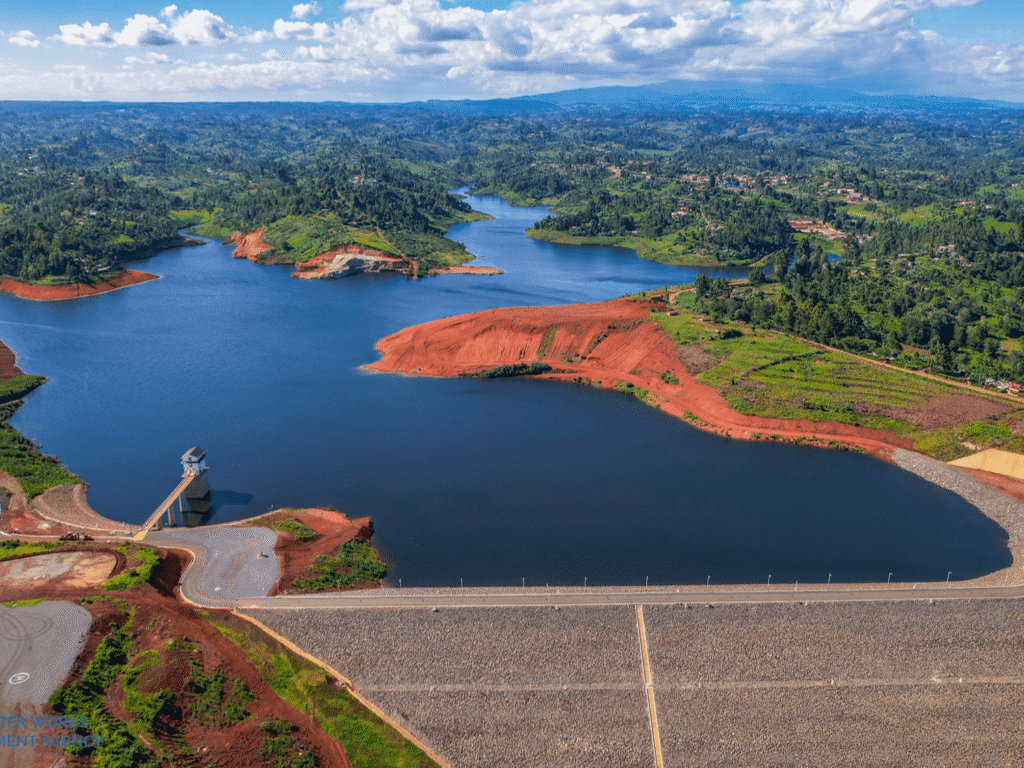
In central Kenya, the Aberdare Range and Mount Kenya are important water catchment areas, supplying rivers that feed major reservoirs and water supply systems. Nairobi, for example, receives much of its piped water from Thika Dam, commonly known as Ndakaini Dam, in Murang’a County. Other important sources include Sasumua Dam in Nyandarua, Ruiru Dam in Kiambu and Kikuyu Springs. Water from these sources is transported through pipelines to treatment plants before being distributed to households and businesses across the capital.
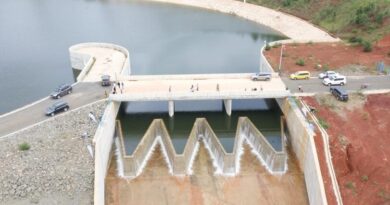
Dams play an important role in making surface water available throughout the year. They collect and store water during rainy seasons, allowing it to be released for treatment and supply during periods of reduced rainfall. Some reservoirs also support irrigation, hydropower generation and flood management. Projects such as Ndakaini, Sasumua and other water storage infrastructure across different counties demonstrate how Kenya uses dams to strengthen water security. However, the availability of water in these reservoirs depends on rainfall patterns, catchment conditions and the amount of water withdrawn for different uses.
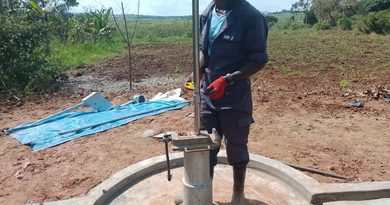
Groundwater is another major source of drinking water, particularly in areas where rivers and piped water infrastructure are limited. It is found beneath the earth’s surface in geological formations known as aquifers, where water accumulates within underground rocks, sand and other permeable materials. Boreholes and wells are used to access these reserves, while natural springs occur where groundwater flows to the surface.
Groundwater is especially important in Kenya’s arid and semi-arid regions, including parts of Turkana, Garissa, Wajir, Mandera and Marsabit. Communities in these areas often depend on boreholes, shallow wells and strategically developed water pans to meet domestic and livestock needs. Solar-powered boreholes are also increasingly being developed to reduce dependence on conventional electricity and improve the reliability of rural water supplies.
The Coast region provides another example of how groundwater and natural springs support large-scale urban water supply. Mombasa, Kilifi and Kwale receive water through regional supply systems that include Mzima Springs in Taita Taveta, Baricho well fields in Kilifi, Marere Springs and Tiwi boreholes in Kwale County. These sources are connected through bulk water infrastructure that transports water across county boundaries to towns and surrounding communities. Lamu also relies on sources including the Shella wells, while smaller rural communities use boreholes, shallow wells, water pans and dams.
Lakes are equally important to Kenya’s water supply, particularly in the western part of the country. Lake Victoria, which Kenya shares with Uganda and Tanzania, is a major source of raw water for Kisumu. The Kisumu Water and Sanitation Company draws water from the lake and River Kibos to serve the city. The availability of such a large freshwater resource provides an important opportunity for water supply development, although pollution, agricultural runoff and other environmental pressures require continuous monitoring and treatment.
In the Rift Valley and western regions, rivers, dams and groundwater systems support different urban and rural water supply schemes. Eldoret, for example, receives water from sources managed by Eldoret Water and Sanitation Company, including Ellegrini River, Two Rivers Dam, Moiben Dam and Kesses Dam. These sources are connected to treatment facilities that process raw water before it enters the distribution network.
Rainwater harvesting also contributes to household water supply, particularly in rural areas and regions with limited access to piped networks. Water is collected from rooftops and other suitable surfaces and stored in tanks, underground reservoirs and community water pans. Although rainfall is seasonal and varies considerably across Kenya, harvesting provides an additional source that can reduce pressure on rivers, dams and groundwater systems.
However, the existence of rivers, lakes, springs and underground water reserves does not automatically mean that the water is safe for drinking. Raw water must undergo appropriate treatment to remove sediments, harmful microorganisms and other contaminants before it can be supplied for human consumption. Water treatment generally involves processes such as coagulation, sedimentation, filtration and disinfection, followed by quality testing to ensure compliance with drinking water standards.
The quality of these resources also depends on how surrounding environments are managed. Deforestation in water catchment areas, destruction of wetlands, soil erosion, agricultural chemicals, untreated sewage and industrial waste can affect the quantity and quality of available water. Excessive groundwater abstraction can also lower water tables, making boreholes less reliable and increasing the cost of accessing underground reserves.
The Water Resources Authority plays an important role in regulating the use and protection of water resources, including monitoring river flows, managing water abstraction permits and overseeing catchment conservation. Water Works Development Agencies develop major water infrastructure, while licensed water service providers are responsible for supplying treated water to consumers. The Water Services Regulatory Board oversees the regulation of water service provision and monitors service standards.
Ultimately, Kenya’s drinking water supply depends on a connected system of natural resources, infrastructure and institutions. From the rivers flowing out of the Aberdares and Mount Kenya to the groundwater reserves beneath arid counties and the springs supplying coastal towns, each source contributes to the country’s water security. Protecting these resources, investing in storage and treatment infrastructure and improving distribution networks will be essential to ensuring that more Kenyans have access to reliable and safe drinking water.