Kenya targets climate risks in Seven water utilities
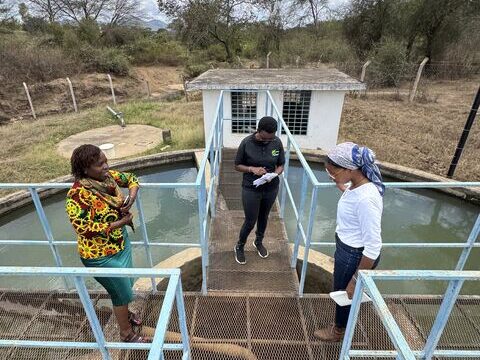
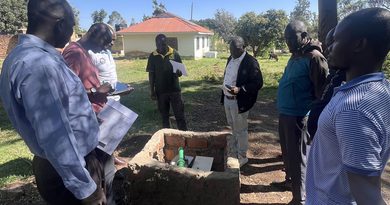
Seven water service providers in Central and Western Kenya have undergone field assessments aimed at identifying climate-related vulnerabilities affecting their infrastructure and operations as efforts to strengthen water resilience gain momentum.
The assessments were conducted as part of the new Water Resilience Solutions Hub, an initiative seeking to connect water utilities facing climate challenges with innovative solutions that can help them improve the reliability and sustainability of services delivered to communities.
A team undertaking the field exercise recently completed visits to seven water utilities, where it examined infrastructure, operational practices and potential areas of vulnerability to climate-related risks.
The field visits provided an opportunity for the team to gain practical, ground-level insights into the challenges facing water service providers. The information gathered is expected to inform the development and selection of practical solutions that can help utilities strengthen their resilience and improve service delivery.
The assessment comes at a time when water utilities are increasingly required to prepare for the impacts of climate variability, which can place pressure on water infrastructure and affect the continuity of services. Understanding the specific vulnerabilities faced by individual utilities is therefore considered important in identifying solutions that are suited to local conditions.
According to the team behind the initiative, the next stage will involve matching the assessed water utilities with innovators capable of providing solutions to address the challenges identified during the field visits.
The approach is intended to ensure that insights gathered from the ground translate into practical interventions rather than remaining as assessment findings. By connecting utilities with innovators, the programme hopes to support the adoption of technologies, approaches and other solutions that can strengthen resilience.
The field exercise also provided an opportunity for the participating utility teams to share their experiences and operational insights with the assessment team. Their openness and willingness to provide information were acknowledged as an important contribution to the exercise.
The initiative is being supported through collaboration with several partners, including OPERO-Services, seecon impact, the Shockwave Foundation, the Conrad N. Hilton Foundation, Siemens Stiftung, and the One Water Foundation.
The partners are supporting efforts to advance practical approaches to climate resilience within the water sector and help utilities respond more effectively to emerging challenges.
With the field assessments now complete, attention is shifting towards the next phase of the initiative, which will focus on identifying suitable innovators and linking them with the water utilities assessed.
More details on the upcoming opportunity are expected to be announced as the Water Resilience Solutions Hub moves from assessment to implementation, with the ultimate goal of helping water service providers build stronger systems and deliver more reliable services to communities.