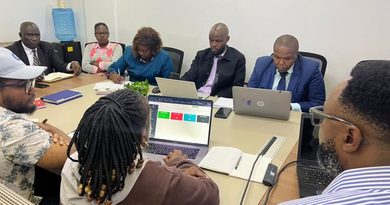
CS Mugaa pushes water meter compliance

Water and Sanitation Cabinet Secretary Eric Mugaa has urged water abstractors to regularise their permits and ensure their meters are functional to avoid unusually high water-use charges and accumulating arrears.
Mugaa said some water users are facing higher bills because they have started the process of obtaining abstraction permits but failed to complete the process after installing the necessary infrastructure.
According to the Cabinet Secretary, such users may be charged based on the estimated amount of water they declared when applying for a permit rather than their actual consumption. The situation can result in significantly higher charges, particularly where water meters are absent, faulty or not properly maintained.
Mugaa explained that users operating without a completed permit and a functional meter can be charged Sh10 for every 1,000 litres of water abstracted. This compares with lower rates applicable to users operating under completed permits and with functioning meters.
Domestic and livestock users under the applicable arrangements are charged Sh2 per 1,000 litres, while domestic consumption under a completed permit with a functioning meter attracts a charge of Sh2.50 per 1,000 litres.
The Cabinet Secretary encouraged water abstractors to complete their permit applications and ensure that their water meters are properly installed, maintained and calibrated. He warned that failure to settle water-use charges could result in the accumulation of arrears and interest, increasing the financial burden on affected users.
Mugaa also sought to clarify the difference between water-resource charges and ordinary water bills paid by consumers.
He said charges imposed by the Water Resources Authority (WRA) relate specifically to the abstraction of water from natural and developed sources, including rivers, dams and underground aquifers. These charges are therefore separate from bills issued by county governments or water service providers for water supplied to households and other consumers.
The government is also encouraging the adoption of smart water-metering technology to improve monitoring of water abstraction and strengthen accountability.
According to Mugaa, GSM-enabled smart meters are being promoted because they can transmit water-use readings directly from abstraction points. The technology is expected to make it easier for authorities to monitor water consumption and improve the accuracy of charges imposed on abstractors.
Users who still rely on older volumetric meters can submit their monthly meter readings through a WRA mobile application, providing an alternative mechanism for reporting water consumption.
The measures are aimed at improving monitoring of water resources while encouraging users to comply with abstraction requirements.
Mugaa’s remarks underscore the importance of completing water abstraction permits and maintaining accurate metering systems as the government seeks to strengthen regulation, improve revenue collection and promote sustainable management of Kenya’s water resources.