Water providers sustain sector engagements
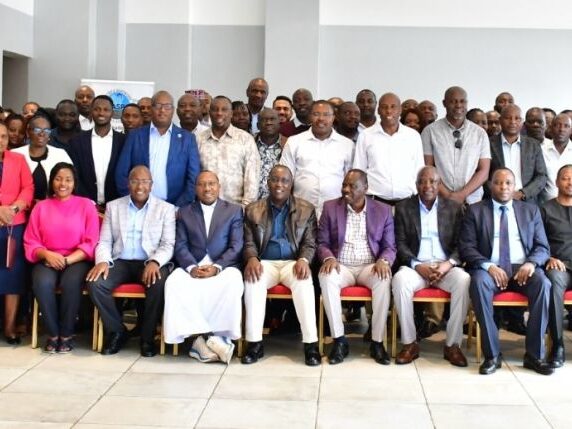
Ongoing efforts to strengthen collaboration, regulation and service delivery in Kenya’s water and sanitation sector have continued with the fifth bi-monthly meeting of the Water and Sanitation Providers Association (WASPA), hosted by Eldoret Water and Sanitation Company.
The meeting formed part of a continuing programme that brings together water service providers, regulators, government agencies, development partners and private-sector players to discuss challenges affecting the sector and identify practical solutions for improving service delivery.
The latest engagement was officially opened by Uasin Gishu Governor Dr. Jonathan Bii and provided a platform for participants to review key regulatory, governance, financial and operational issues affecting water and sanitation providers.
Discussions during the meeting were led by WASREB Chief Executive Officer Leparan C. Tialal, who guided plenary sessions focusing on regulatory matters. Participants examined issues including compliance, tariff setting, governance training and bulk water supply.
The continued engagements provide water service providers with an opportunity to interact with regulators and gain a better understanding of requirements governing their operations. They also create a platform for providers to share experiences and discuss approaches to improving the efficiency and sustainability of water services.
Water Resources Authority (WRA) Chief Executive Officer CPA James Mburu highlighted the Authority’s mandate in the conservation, protection and management of water resources. He also explained the process of water resource use permit authorization and the requirements that water service providers must meet.
Mburu emphasized the need for water service providers to install smart meters as part of the conditions attached to water resource use permits. The technology is expected to support improved monitoring of water abstraction and provide more accurate information for water-resource management.
The meeting also continued discussions on human-resource and financial management within public institutions. Salaries and Remuneration Commission Chief Executive Officer Ali Surrow outlined the Commission’s mandate in guiding public-sector institutions on salaries and other financial matters.His presentation covered Collective Bargaining Agreements, job evaluations and the development of appropriate organisational and salary structures. These areas remain important to the ability of water utilities to maintain effective institutions and attract and retain the personnel required to deliver essential services.
Innovation and technology were also incorporated into the ongoing sector engagements. WASPA associate members and partners used the meeting to showcase solutions that could help water service providers improve their operations.
Merck presented microbiology and water-testing solutions, while Ebara Pumps East Africa highlighted pumping technologies. Danco Capital showcased smart metering solutions, real-time analytics and alarm management systems, including a case study drawn from Eldoret Water and Sanitation Company.
Postbank also presented financial solutions aimed at supporting the water sector, adding to discussions on the financial tools available to water service providers as they seek to improve their operations and sustainability.
The participation of different stakeholders reflected the broad range of issues that water and sanitation providers must address to ensure reliable services. From water-resource management and regulatory compliance to tariffs, human-resource management, technology and financing, the ongoing programme provides a platform for addressing challenges from different perspectives.
The fifth bi-monthly meeting therefore represented another step in the continuing engagement between WASPA members and their partners. The regular meetings are intended to sustain dialogue, promote knowledge sharing and encourage collaboration among institutions working within the water and sanitation sector.
The programme also reinforces the importance of innovation in improving the performance of water utilities. Technologies such as smart meters, real-time monitoring and improved water-quality testing can provide providers with better information for decision-making while supporting regulatory compliance.
As the engagements continue, sector stakeholders are expected to maintain discussions around measures that can strengthen governance, improve financial sustainability and enhance the efficiency of water and sanitation services.
WASPA reaffirmed its commitment to sustaining collaboration among water service providers and other sector stakeholders, with the ongoing programme providing a platform for addressing emerging challenges and advancing more efficient and sustainable water services across Kenya.