Smart technology advances water resource management
Kenya’s efforts to improve the management of its water resources are increasingly incorporating digital technology, with smart monitoring systems emerging as an important tool for improving efficiency, accountability and regulation in the sector.
Effective water resource management requires accurate information on how water is being abstracted and used from rivers, dams, springs and underground sources. As demand for water continues to grow across households, agriculture, industry and other economic activities, authorities are looking for more efficient ways of monitoring water use and supporting sustainable allocation of the available resources.
The Water Resources Authority (WRA) is contributing to this shift through the adoption of digital solutions designed to improve the monitoring and management of water resources. One of its initiatives, the Smart Meters Management System, has received recognition for its contribution to digital innovation in natural resource management.
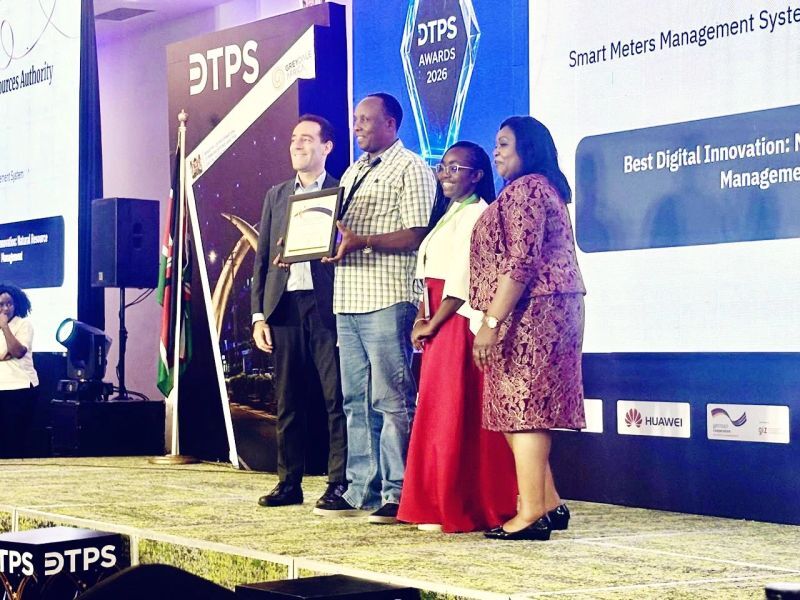
The system earned the WRA second runner-up position in the Best Digital Innovation in Natural Resource Management category during the Digital Transformation Public Sector Awards 2026. WRA Chairman Donald Murgor and Head of ICT Department Faith Wawira Nyaga represented the Authority during the awards ceremony.
The recognition highlights the growing role of technology in supporting water resource management and regulatory functions. Smart metering can provide more timely and reliable information on water abstraction, helping authorities and water users better understand consumption patterns and improve compliance with authorised abstraction levels.
Reliable water-use data is important for planning and regulation because water resources are limited and unevenly distributed across different parts of the country. Monitoring abstraction can also support efforts to identify excessive use and promote responsible utilisation of available water resources.
The adoption of digital systems comes against a broader need to modernise water resource management. Traditional approaches to monitoring water use can depend heavily on manual processes, which may limit the speed and availability of information needed for effective decision-making. Digital systems offer opportunities to improve data collection, storage, analysis and reporting.
For the WRA, the development of the Smart Meters Management System reflects an effort to integrate technology into the management of the country’s water resources. Such systems can support regulatory agencies in accessing better information while also providing a basis for improved engagement with water users.
Digital transformation can also contribute to greater accountability among water users and regulators. When information on abstraction is captured more efficiently, it can help support compliance monitoring and inform decisions on the sustainable allocation of water resources.
The recognition at the Digital Transformation Public Sector Awards therefore places attention on the link between technological innovation and environmental management. It also demonstrates how public institutions can use digital tools to address resource management challenges and improve the delivery of regulatory functions.
Water resource management remains critical to Kenya’s social and economic development because communities, agriculture, industries and ecosystems depend on adequate and sustainable water supplies. Protecting these resources requires a combination of sound regulation, conservation, reliable data and responsible use.
As climate variability and increasing demand continue to place pressure on water resources, digital innovation is expected to play a growing role in strengthening monitoring and decision-making. The WRA’s recognition for its Smart Meters Management System signals continued movement towards technology-driven approaches to securing water resources and supporting sustainable use for present and future generations.