





The Government of Kenya, in partnership with the Agence Française de Développement (AFD), is advancing a major water and sanitation infrastructure project aimed at improving water reliability and expanding sewerage services in Western Nairobi.
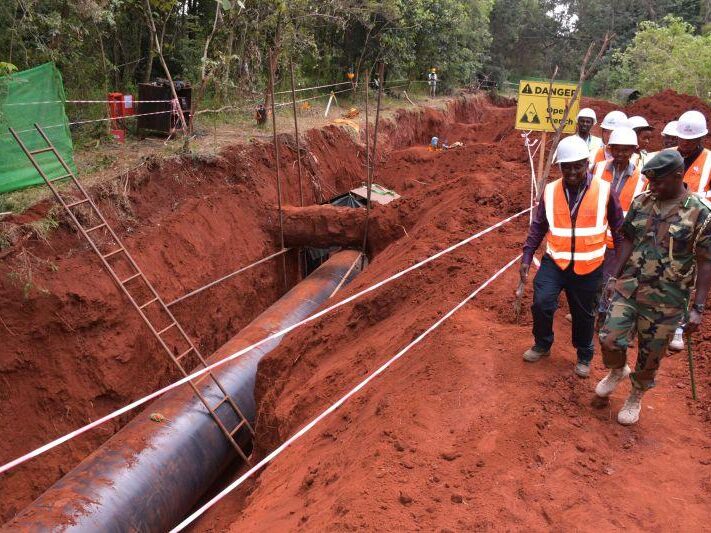
The Western Nairobi Water and Sanitation Project, being implemented through the Athi Water Works Development Agency (AWWDA), includes the construction of a 19.7-kilometre Kabete–Olesereni pipeline corridor and a 5,500-cubic-metre water storage reservoir in Karen.
The project is designed to strengthen water transmission capacity, improve distribution pressure and extend household access in neighbourhoods experiencing growing demand due to urban expansion.
The works also include a 4.3-kilometre Wilson distribution main and approximately 54 kilometres of additional water distribution pipelines covering Kangemi, Kawangware, Kabiria, Ngong Forest, Karen Plains, Kirigu and Kinoo.
On the sanitation side, AWWDA plans to construct approximately 63 kilometres of sewerage reticulation networks in Dagoretti, Ngando, Riruta, Kawangware, Kangemi and Uthiru. The project will also provide 560 new water connections and 640 sewer connections, including supporting service lines to connect households to the expanded networks.
The infrastructure programme is expected to improve water services for approximately 300,000 people and enhance sanitation services for another 250,000 residents. The expanded sewer network is also expected to reduce environmental pollution and public health risks associated with inadequate wastewater management.
The project, estimated at KSh3 billion, is supported through financing from the French Development Agency, with the Government of Kenya overseeing its implementation through AWWDA. The construction contract was awarded to a joint venture between Zhongmei Engineering Group Limited and Hunan Construction Investment Water Conservancy and Hydropower Company, with a planned implementation period of 24 months.
During a site inspection, AWWDA Lead Project Engineer Eng. Samuel Odhiambo outlined the project’s technical scope, implementation progress and anticipated benefits to communities.
The development comes as Nairobi continues to experience increasing pressure on its existing water and sanitation infrastructure, driven by population growth and expansion of residential settlements.
Once completed, the project is expected to improve the reliability of water distribution across Western and Southern Nairobi while extending sewerage services to neighbourhoods that have experienced limited sanitation coverage.
The investment forms part of broader government interventions to strengthen urban water infrastructure, improve access to essential services and support sustainable urban development.