Clean tech drives Kenya’s water security

Kenya is increasingly turning to clean technologies and innovative water treatment solutions as stakeholders seek to strengthen water security and improve the resilience of communities, industries and institutions facing climate-related challenges.
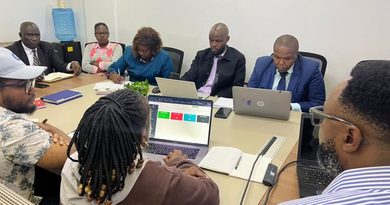
The need for sustainable water solutions took centre stage during the Nairobi Climate Talks held at the German Ambassador’s Residence in Nairobi, where stakeholders explored how clean technologies can support the country’s industrial, commercial and municipal water needs.
The forum, held under the theme, “Securing Kenya’s Industrial, Commercial and Municipal Water Future Through Clean Technologies,” brought together representatives from the public and private sectors, development partners and technology providers to discuss practical approaches to sustainable water management.
The discussions were convened by the German Embassy in Kenya and the Delegation of German Industry and Commerce for Eastern Africa (AHK Eastern Africa), providing a platform for participants to exchange ideas on water security, climate resilience and the adoption of innovative technologies.
Deputy Ambassador of the Embassy of the Federal Republic of Germany to Kenya, Konrad Lax, attended the event, highlighting the importance of continued cooperation and knowledge sharing between Kenya and Germany in addressing environmental and water-related challenges.
WaterKiosk Africa participated in the discussions by presenting clean-energy solutions aimed at expanding access to water in areas where conventional infrastructure may be limited or difficult to establish.
As the local partner of Boreal Light GmbH, the organization showcased solar-powered desalination technology designed to provide alternative water sources for off-grid communities. The technology uses renewable energy to support water treatment, offering an approach that can reduce dependence on conventional energy sources.
The company also contributed to conversations on decentralized water treatment and the use of solar power to support sustainable water production. Such approaches are increasingly being considered as part of broader efforts to diversify water sources and improve the reliability of water supplies.
The discussions highlighted the importance of developing solutions that are not only technologically advanced but also practical, scalable and responsive to local conditions.
Kenya’s water sector faces growing pressure from population growth, urbanization, changing weather patterns and increasing demand from households, businesses and industries. These pressures have strengthened the need for investments in water infrastructure, efficient resource management and technologies capable of supporting communities during periods of water stress.
Clean-energy technologies could also play a role in reducing the energy costs associated with water treatment and supply, particularly in areas that are not adequately connected to conventional power infrastructure.
Stakeholders at the Nairobi forum emphasized the value of collaboration in accelerating the adoption of such solutions. Partnerships between governments, technology companies, development organizations and local communities can help strengthen innovation and improve the deployment of appropriate water technologies.
The engagement further underscored the importance of exploring alternative water sources while promoting renewable energy as part of Kenya’s wider climate resilience efforts.
WaterKiosk Africa said it remains focused on advancing renewable-energy-powered water solutions that can support communities and institutions as they respond to a changing climate.
The discussions in Nairobi therefore provided an opportunity to connect clean energy innovation with the country’s long-term water security goals, while highlighting the role of partnerships and technology in building more resilient water systems