
Water partnership builds skills for sustainable services
Efforts to improve access to reliable and safe water in underserved communities are increasingly shifting beyond infrastructure development to include skills transfer, technical capacity and local expertise needed to sustain water systems over the long term.
This approach was highlighted during a partnership engagement between WaterKiosk Africa and Oxfam Somali, which explored opportunities to strengthen water services while developing the technical skills required to maintain and expand water solutions.
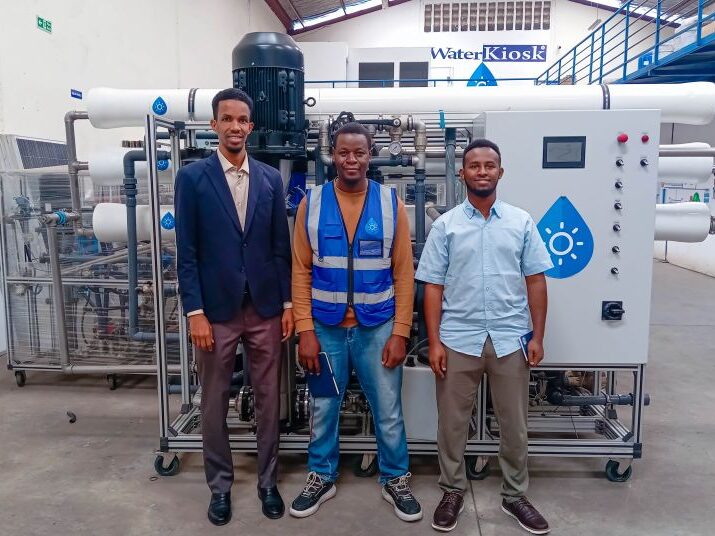
WaterKiosk Africa hosted Oxfam Somali representatives Zakarie Abdi and Abdikadar Osman for a courtesy visit and discussions on the organizations’ continued collaboration in the water sector.
Under the existing partnership, Oxfam Somali has eight water systems that have been installed and are maintained by WaterKiosk Africa. The systems form part of efforts to improve access to safe and reliable water for communities while supporting sustainable water service delivery.
The meeting provided an opportunity for the partners to review the collaboration and discuss ways of strengthening its long-term impact. Particular attention was given to the importance of ensuring that water infrastructure is supported by adequate technical expertise and a workforce capable of operating, maintaining and expanding such systems.
The partners also explored the possibility of establishing a WaterKiosk Academy, a proposed platform that would focus on competency development, knowledge sharing and professional skills development within the water sector.
The proposed academy could provide opportunities for professionals and other sector stakeholders to strengthen their knowledge and practical capabilities in areas related to water systems, technology, operations and maintenance.
The discussions underscored the growing recognition that sustainable water access depends not only on the installation of infrastructure but also on the availability of skilled personnel to manage the systems throughout their operational life.
Water systems require regular maintenance, technical monitoring and timely interventions to remain functional and deliver reliable services to communities. Building local capacity can therefore help reduce operational challenges and strengthen the sustainability of investments in water infrastructure.
The proposed WaterKiosk Academy would also create a potential platform for sharing knowledge and practical experiences from water projects, helping stakeholders learn from existing systems and improve the implementation of future interventions.
For communities that depend on water infrastructure for household and livelihood needs, maintaining functional systems is essential to ensuring continued access to safe water.
The engagement between WaterKiosk Africa and Oxfam Somali therefore points to a broader approach to development partnerships, where infrastructure investment is complemented by capacity building and knowledge transfer.
Both organizations expressed interest in exploring additional opportunities for collaboration aimed at creating lasting impact in the communities they serve.
The partnership demonstrates how collaboration between water-sector organizations and development partners can combine infrastructure, technical expertise and knowledge to strengthen sustainable water services.
As demand for reliable water services continues to grow, investment in skilled professionals and local technical capacity is expected to remain an important component of efforts to build resilient and sustainable water systems.
The engagement concluded with a shared focus on strengthening the partnership and exploring new opportunities to improve water access while building the expertise needed to sustain services for the long term.


