
TWWDA boosts water resource productivity
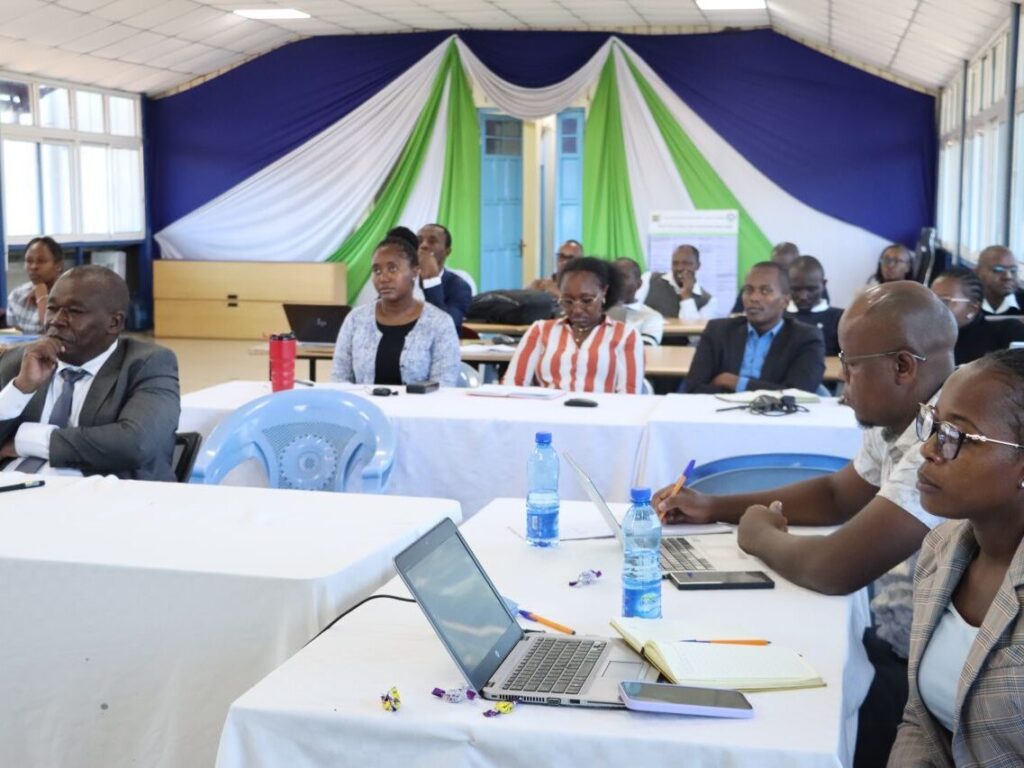
Tana Water Works Development Agency (TWWDA) is strengthening staff capacity on productivity as part of efforts to improve the management and development of water resources and enhance service delivery to communities within its area of jurisdiction.
The Agency is conducting a week-long workshop facilitated by the National Productivity and Competitiveness Centre (NPCC), with the training focusing on productivity mainstreaming and the implementation of the new Productivity Guidelines.
The workshop is aimed at equipping staff with a better understanding of the guidelines and helping them align the Agency’s productivity indicators and performance measurements with the new requirements. The training comes at a time when efficient management of water resources requires institutions to make effective use of available human, financial and technical resources.
For TWWDA, improving productivity is closely linked to its responsibility of developing and managing water infrastructure that supports access to reliable and sustainable water supplies. Staff efficiency and effective institutional systems are important in ensuring that water resource projects are properly planned, implemented and monitored.
The sensitisation sessions are providing employees with an opportunity to understand how productivity principles can be applied in their respective areas of work. Staff are also expected to examine ways of improving efficiency, reducing delays and strengthening coordination in the implementation of activities related to water resources and infrastructure development.
The alignment of productivity metrics with the new guidelines will also contribute to the Agency’s performance management framework. Productivity is among the indicators assessed under the Performance Contract, making the successful mainstreaming of the guidelines an important component of TWWDA’s institutional performance.
Efficient institutions play a significant role in addressing challenges facing the water sector, including increasing demand for water, climate variability, pressure on water resources and the need for sustainable infrastructure. Strengthening the capacity of staff to deliver their responsibilities effectively can support timely implementation of projects and improve the overall management of water resources.
The workshop is therefore expected to promote a culture in which employees continuously assess their performance and identify opportunities for improvement. Such an approach can contribute to better planning, efficient use of resources and stronger monitoring of water-related programmes and projects.
The involvement of NPCC provides TWWDA staff with technical guidance on productivity mainstreaming and the application of the new national guidelines. The training also offers an opportunity for staff to connect productivity targets with the Agency’s broader mandate and institutional objectives.
As the workshop continues, employees are expected to explore practical approaches for incorporating productivity principles into their daily operations. The knowledge gained will support efforts to improve internal processes while strengthening the Agency’s capacity to deliver water infrastructure and related services effectively.
The initiative underscores the connection between institutional productivity and sustainable water resource management. By strengthening staff performance and promoting continuous improvement, TWWDA is seeking to enhance its ability to plan, develop and manage water resources while supporting improved water service delivery to communities.
The productivity mainstreaming programme therefore forms part of the Agency’s broader efforts to build an efficient and accountable institution capable of responding to evolving water needs and supporting sustainable development within its area of operation.