








The Athi Water Works Development Agency (AWWDA) has undertaken a technical benchmarking visit to the Mwache Multipurpose Dam in Kwale County to strengthen engineering capacity and improve the implementation of large-scale water infrastructure projects.
The visit, conducted on November 23, 2026, was led by the agency’s Director of Infrastructure Development, Eng. Bonnie Nyandwaro, and involved technical staff who examined the engineering methods, construction technologies and quality management systems being applied in the development of the dam.
The exercise comes as Kenya continues investing in major water storage and bulk supply infrastructure to address growing demand, particularly in regions experiencing persistent water shortages and increasing pressure on existing water sources.
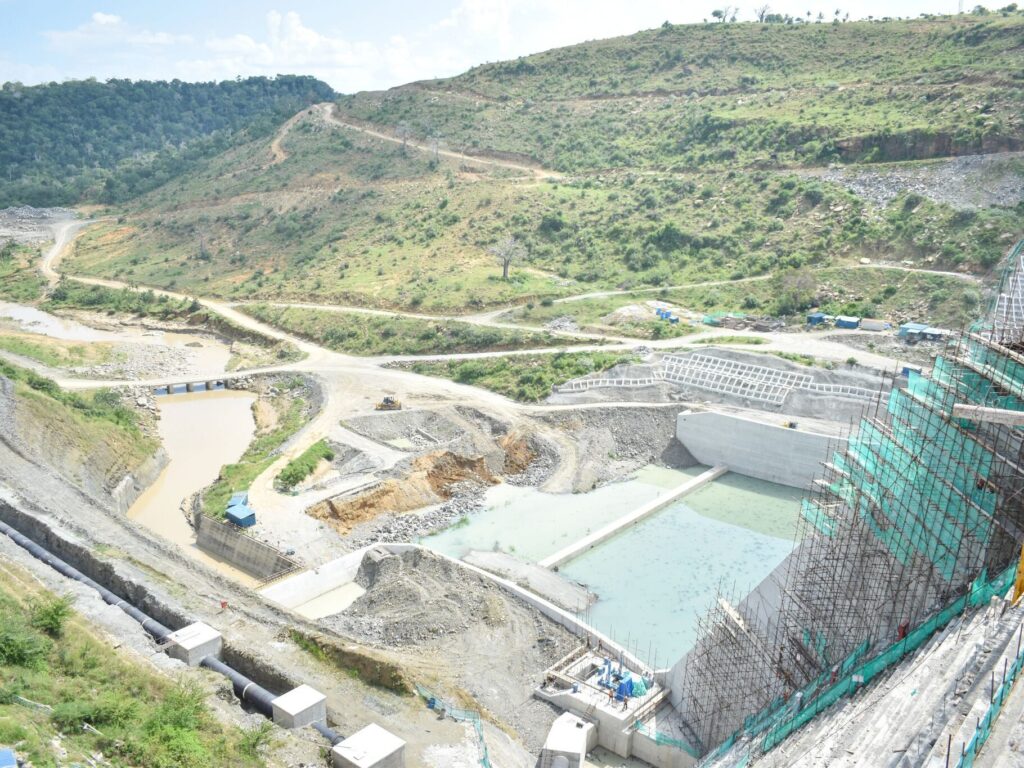
High angle view of the construction of the ongoing Mwache Dam in Kwale county under construction
Mwache Dam is one of the country’s major strategic water infrastructure investments, designed to strengthen water security across the Coast region by supplying 186,000 cubic metres of treated water daily to Mombasa and Kwale counties. The project is also expected to support irrigation development and improve resilience to changing rainfall patterns.
The 84-metre-high Roller Compacted Concrete (RCC) gravity dam is designed to store approximately 136 million cubic metres of water. Its construction incorporates an ogee spillway and supporting structures intended to manage water flows and ensure the safe operation of the reservoir.
During the visit, the AWWDA delegation received technical briefings on the project’s development, tracing its origins to the 1992 National Water Master Plan, subsequent design reviews and approval for construction in 2019.
The discussions examined several aspects of major dam development, including geotechnical investigations, engineering design methodologies, environmental and social safeguards, construction challenges, contract variations and community engagement.
These areas are particularly important in large infrastructure projects, where ground conditions, construction materials, environmental considerations and changing site requirements can influence project costs, timelines and structural performance.
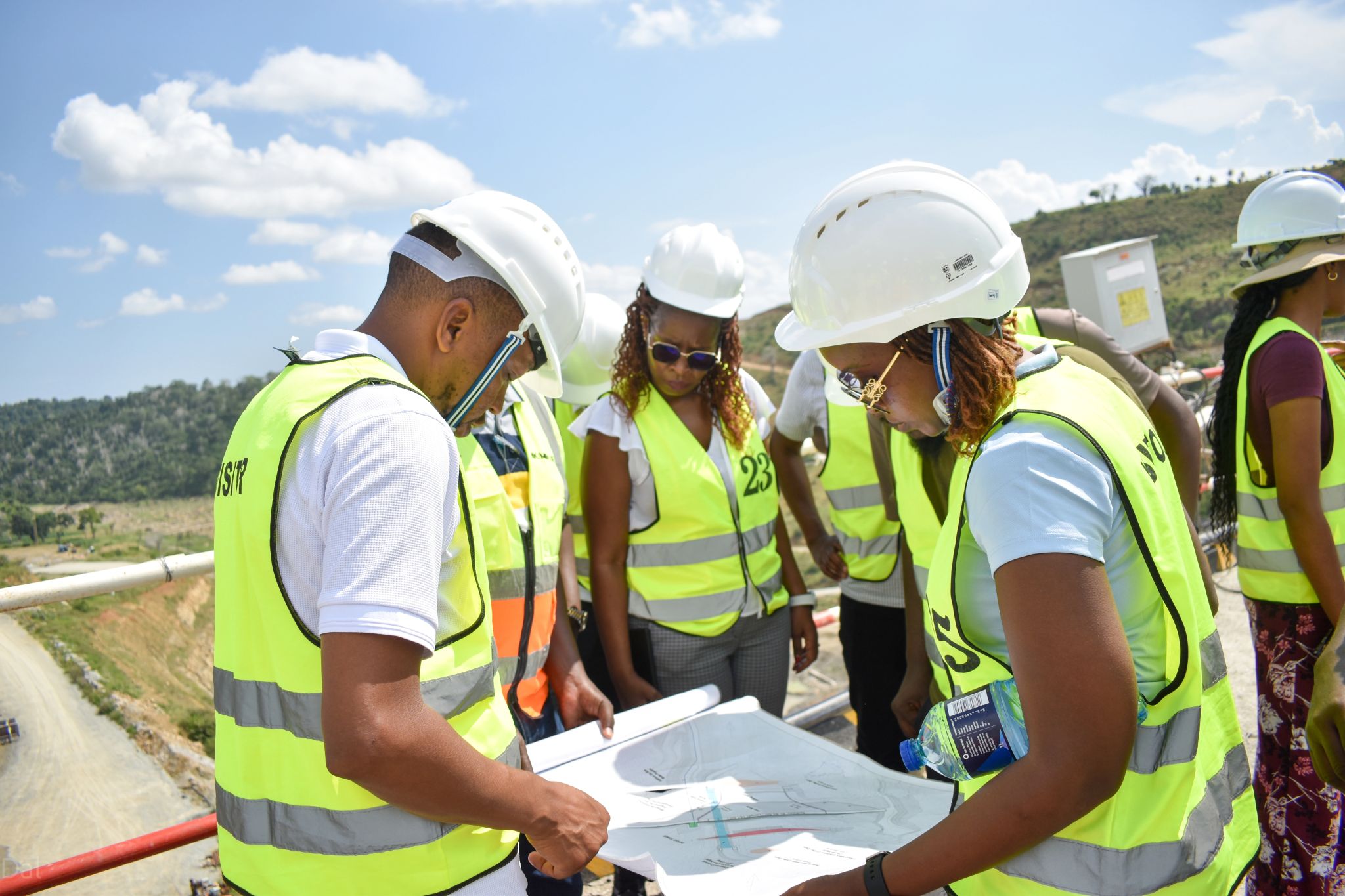
The engineers also toured key installations, including the main dam, diversion tunnel, lower check dam, materials testing laboratory, borrow areas and concrete mixing and batching facilities.
Engagements with the project’s management team provided further insights into dam design considerations, laboratory quality assurance and quality control procedures, construction materials testing and project implementation schedules.
The technical discussions placed emphasis on the importance of testing construction materials throughout the building process to ensure that they meet required engineering specifications.
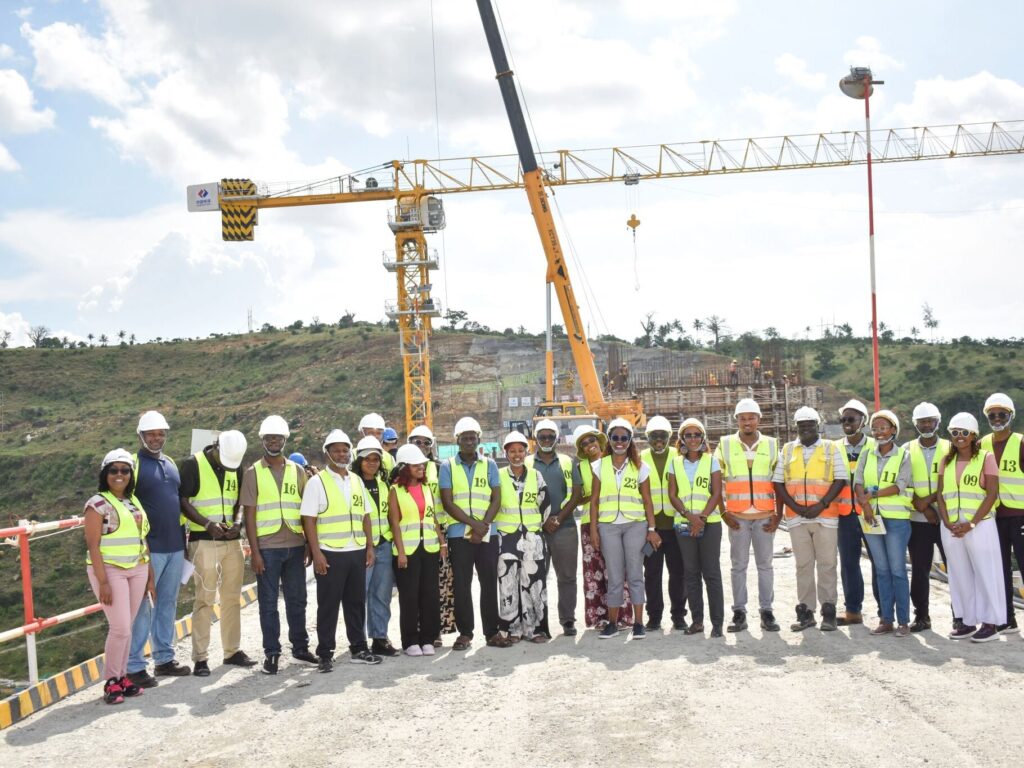
The Athi Water Works Development Agency (AWWDA) team standing at the construction site of the ongoing Mwache Dam in Kwale county
The Mwache project uses Roller Compacted Concrete technology, a construction method involving the placement of concrete in successive layers before compaction using heavy vibratory rollers. The technique is suited to large gravity dams because it allows substantial volumes of concrete to be placed efficiently while maintaining the required structural properties through controlled mixing, placement and compaction.
The lower check dam is another important component of the project. It is designed to help manage sediment movement and reduce the amount of suspended material reaching the main reservoir, supporting water quality and the long-term performance of the storage facility.
Beyond the main dam structure, the wider project incorporates water supply, catchment management and community development interventions. These components are important in ensuring that the investment delivers sustainable benefits beyond the construction site.
According to the Ministry of Water, the dam is intended to address the longstanding imbalance between water demand and available supply along the Coast. The additional production capacity will support households, industries and institutions while reducing pressure on existing water sources.
The project also has a climate resilience dimension because capturing and storing river flows can improve the availability of water during periods of reduced rainfall. Catchment protection and sediment management will remain important in preserving the reservoir’s storage capacity over time.
The government reported in October 2026 that the wider Mwache project had reached approximately 94 per cent completion, with the main dam and associated infrastructure progressing towards the next implementation milestones. However, the treatment plant and transmission infrastructure are also essential before the planned bulk supply can reach consumers.
For AWWDA, the benchmarking exercise provides an opportunity to gain practical experience from a major dam construction project and strengthen the technical expertise needed to deliver similar infrastructure investments.
The agency said the visit forms part of its continued efforts to promote knowledge exchange, strengthen institutional engineering capacity and encourage the adoption of modern dam construction technologies and industry best practices.
As Kenya expands investments in dams, water treatment facilities and transmission networks, strengthening the skills of engineers involved in planning, supervising and managing these projects will be important in ensuring infrastructure quality, efficiency and long-term sustainability.